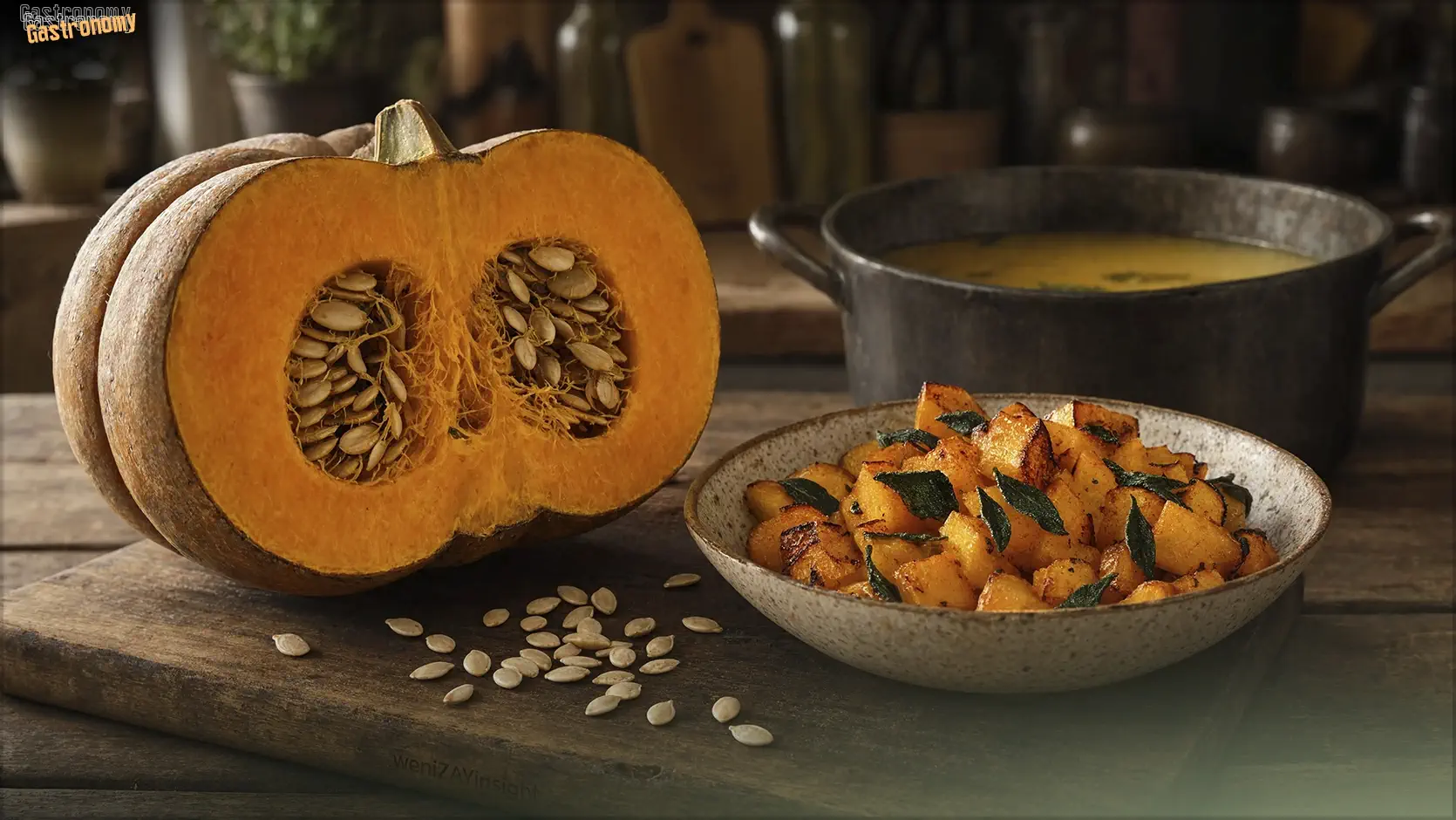
The Vegetable We Forgot How to Eat
Every autumn, the pumpkin performs its strange double life. On the porch, it is a decoration — carved into a grinning face, lit from within, admired for a week, and then left to rot on the curb. In the café, it is a flavour — a syrupy, cinnamon-dusted suggestion of itself, pumped into lattes and pies until the actual vegetable has almost disappeared. Somewhere between the jack-o'-lantern and the latte, we forgot the oldest truth about the pumpkin: it is food. It is a whole meal. And it is asking, quietly and patiently, to be respected.
A single medium pumpkin — the kind you carve or buy at the market — can feed you for three days. Its flesh roasts into sweet, savoury gold. Its seeds, cleaned and toasted, become one of the best snacks of the year. Its skin, simmered gently, gives up a broth the colour of weak tea and the flavour of deep autumn. Nothing about it is wasted. Nothing about it needs sugar to be good. The pumpkin was never a decoration. It was always dinner.
Beyond the Latte: What the Pumpkin Actually Is
The pumpkin belongs to the squash family, one of the oldest cultivated food groups in the world. Long before it was carved or caffeinated, it was a staple — stored through winter, roasted over fires, simmered into stews. Indigenous foodways across the Americas treated the pumpkin and its relatives as the earth's stored warmth, a vegetable built to survive the dark months and feed the people through them.
But not every pumpkin is the same. The one on your porch and the one in your soup bowl are not the same vegetable, and knowing the difference is the first step in cooking it well. If you have ever roasted a pumpkin and found it bland and watery, the problem was not your cooking — it was the pumpkin. The full guide to telling them apart is in the field guide to choosing the right squash, but the short version is this: for eating, choose a sugar pumpkin, butternut, kabocha, or Hokkaido. Leave the big, ribbed jack-o'-lantern on the porch.
The Three Parts of the Whole Pumpkin
To honour the pumpkin fully, use all of it. Here is how each part earns its place at the table.
1. The Flesh: Roast It, Don't Boil It
The flesh is the main event, and the method matters. Boiling a pumpkin makes it watery and bland. Roasting it — cut into chunks, tossed in olive oil, salted, and spread on a tray — concentrates its sugars and deepens its flavour until the edges caramelise and the centre turns creamy. Roast at 200°C (400°F) for 30–40 minutes, until the edges are browned and a knife slides in easily. This is the base for everything: soups, stews, grain bowls, or simply a plate of roasted pumpkin with sage and a squeeze of lemon. If you have ever stored squash through the cold months, you already know this is the earth's way of holding warmth until you are ready to eat it.
2. The Seeds: The Snack You Were Throwing Away
Every pumpkin you carve is hiding a bowl of free, delicious snacks. The seeds, rinsed clean of their stringy pulp, tossed in a little oil and salt, and roasted at 180°C (350°F) for 15–20 minutes, become crisp, nutty, and addictive. Add smoked paprika, cayenne, or a pinch of cinnamon if you like. They are one of the highest-protein snacks of the season, and they cost you nothing. The full method, with five flavour variations, is in the complete guide to roasting pumpkin seeds.
3. The Skin and Scraps: The Broth Nobody Makes
After you have roasted the flesh and toasted the seeds, you are left with the skin, the stringy pulp, and the trimmings. Most people compost them. But simmered gently in water for an hour, with a bay leaf and a few peppercorns, they give up a light, golden, deeply savoury broth — the same principle as the stockpot's slow extraction, applied to the vegetable kingdom. Strain it, and you have the perfect base for a pumpkin soup, a risotto, or a pot of the garden's last soup. The full zero-waste method is in the guide to pumpkin scrap broth.
The Recipe: Savory Roasted Pumpkin with Sage
What you need:
- 1 medium pumpkin (or any winter squash), halved, seeded, and cut into 3 cm chunks
- 3 tbsp olive oil
- 3 cloves garlic, crushed
- 10–12 fresh sage leaves
- 1 tsp sea salt
- 1/2 tsp black pepper
- 1/2 tsp chilli flakes (optional)
- A squeeze of lemon, to finish
How to make it:
- Preheat: Heat the oven to 200°C (400°F). Line a large baking tray with parchment.
- Coat the pumpkin: Toss the pumpkin chunks with the olive oil, garlic, salt, pepper, and chilli flakes until evenly coated. Spread in a single layer, leaving space between pieces.
- Add the sage: Scatter the sage leaves over the tray. They will crisp into brittle, savoury chips as the pumpkin roasts.
- Roast: 30–40 minutes, turning once halfway, until the edges are deeply caramelised and the centres are creamy.
- Finish: Squeeze the lemon over the tray, toss gently, and serve hot — as a side, over grains, or folded into a soup.
The Meal That Was Hiding in the Decoration
When you finish, look at what one pumpkin has given you: a tray of golden, sage-scented flesh; a bowl of crisp, salted seeds; and a pot of light, savoury broth waiting to become soup. Three meals, three textures, three temperatures — all from the vegetable you were about to carve and discard. The pumpkin was never a decoration. It was a meal that had been waiting, patiently, for someone to take it seriously.
So this autumn, when you buy your pumpkin, buy it with respect. Choose the right variety — the small, dense sugar pumpkin rather than the hollow jack-o'-lantern. Carve it if you must, but save the flesh, rinse the seeds, and simmer the skin. Let the porch have its grin, and let the kitchen have the rest. Because the pumpkin is not asking to be admired. It is asking to be eaten. And it has been asking for a very long time.
Для комментирования войдите или зарегистрируйтесь.