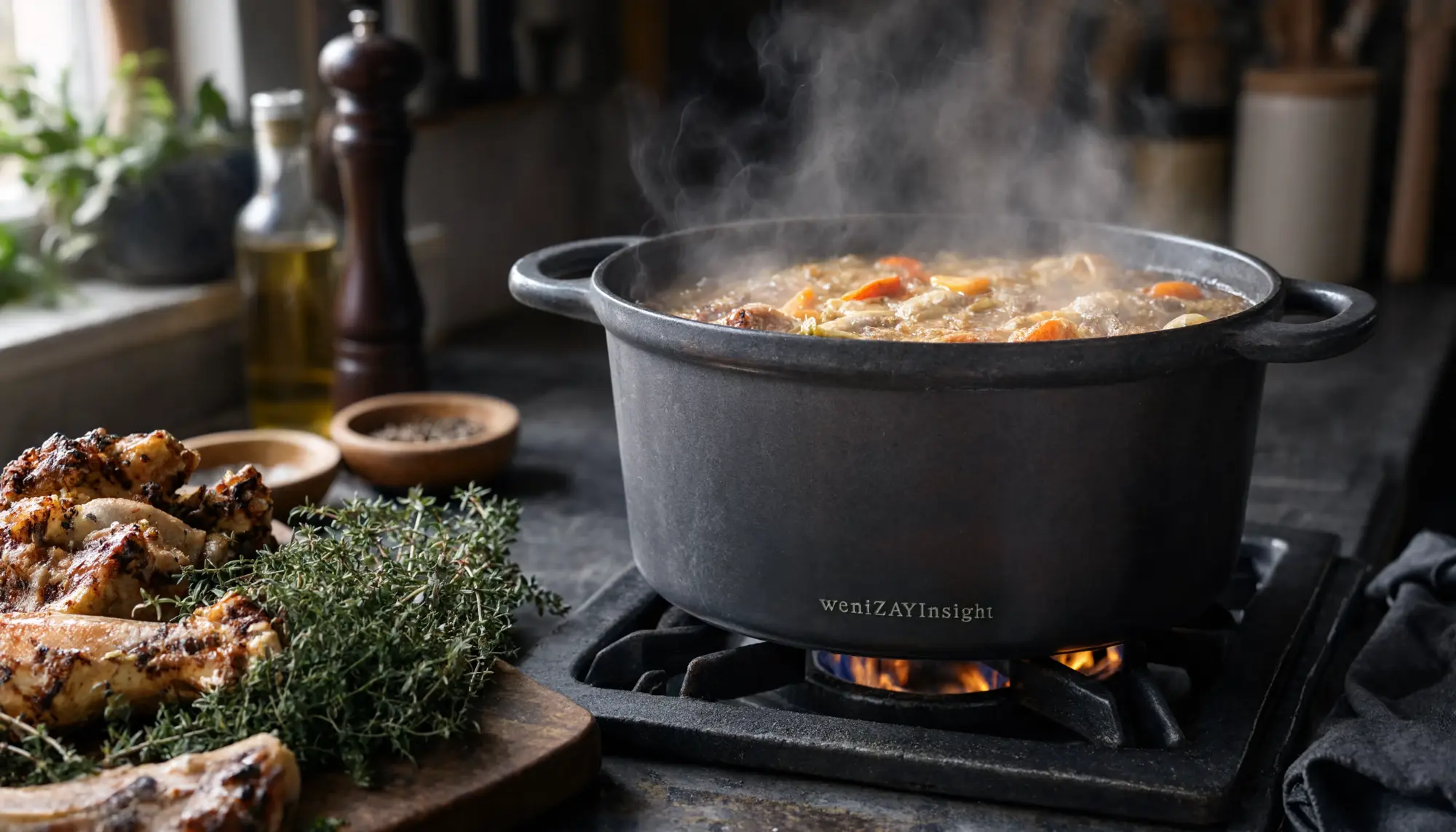
The Anatomy of a Twelve-Hour Simmer
The modern kitchen is a theater of urgency. We are surrounded by appliances designed to conquer time: air fryers that crisp in minutes, pressure cookers that force tenderness through sheer atmospheric violence, and microwaves that erase the waiting entirely. We have been taught that speed is the ultimate virtue of cooking. But a heavy stockpot left on the lowest possible flame is a quiet, stubborn rebellion against this cult of hurry.
When you drop roasted bones, charred onions, and a sprig of thyme into cold water and turn on the heat, you are making a contract with time. There are no shortcuts to depth. The water does not boil; it barely shivers. It is a gentle, sustained warmth that asks for nothing but patience. This is the essence of slow cooking—an act of faith that the universe will reward those who are willing to wait.
The Alchemy of Gentle Heat
There is a profound biological truth hidden in collagen science. The connective tissues, cartilage, and marrow inside a beef or chicken bone are tough and unyielding. If you blast them with high heat, they seize up. They only surrender to a low, steady simmer over many hours. As the clock ticks past the six-hour mark, the collagen slowly hydrolyzes into gelatin. The liquid transforms, becoming viscous, rich, and deeply restorative.
This is why bone broth feels like a physical embrace when you are sick or tired. It is not just the minerals; it is the energetic signature of the process. You are drinking liquefied time. You are consuming the physical manifestation of patience.
A Ritual for the Impatient Mind
To make a true seasonal ritual out of your stockpot, approach the process not as a chore, but as a meditation on letting go of control:
- Roast with intention: Brown the bones and vegetables deeply in the oven. This Maillard reaction is the foundation of flavor, building a complex base that water alone cannot achieve.
- Start cold: Always start with cold, filtered water. This allows the impurities to rise slowly to the surface to be skimmed, resulting in a clearer, cleaner broth.
- Find the bare simmer: Turn the heat down until the surface of the water only occasionally breaks with a single, lazy bubble. This is the exact temperature collagen loves.
- Walk away: Do not hover. Do not constantly adjust the lid. Let the pot do its work while you read, sleep, or live your life. Trust the process.
Ancestral Memory in a Bowl
For centuries, the stockpot was the heart of the home. It was rarely empty. In peasant kitchens across the world, bones were never thrown away; they were returned to the pot. The broth was a living thing, constantly replenished with water and scraps, a continuous thread of nourishment connecting generations. When we smell a pot of comfort food simmering, we are tapping into a deep, ancestral memory. It smells like safety. It smells like a grandmother who knew that the best things in life cannot be hurried.
As the twelve hours end and you strain the golden liquid through a fine mesh sieve, the kitchen will smell of roasted earth and deep warmth. You have not just made soup. You have spent a day practicing kitchen patience. You have proven to yourself that you can stand still while the world rushes by. And when you finally sip that first warm, gelatinous bowl, you will taste the quiet victory of time well spent.
Для комментирования войдите или зарегистрируйтесь.