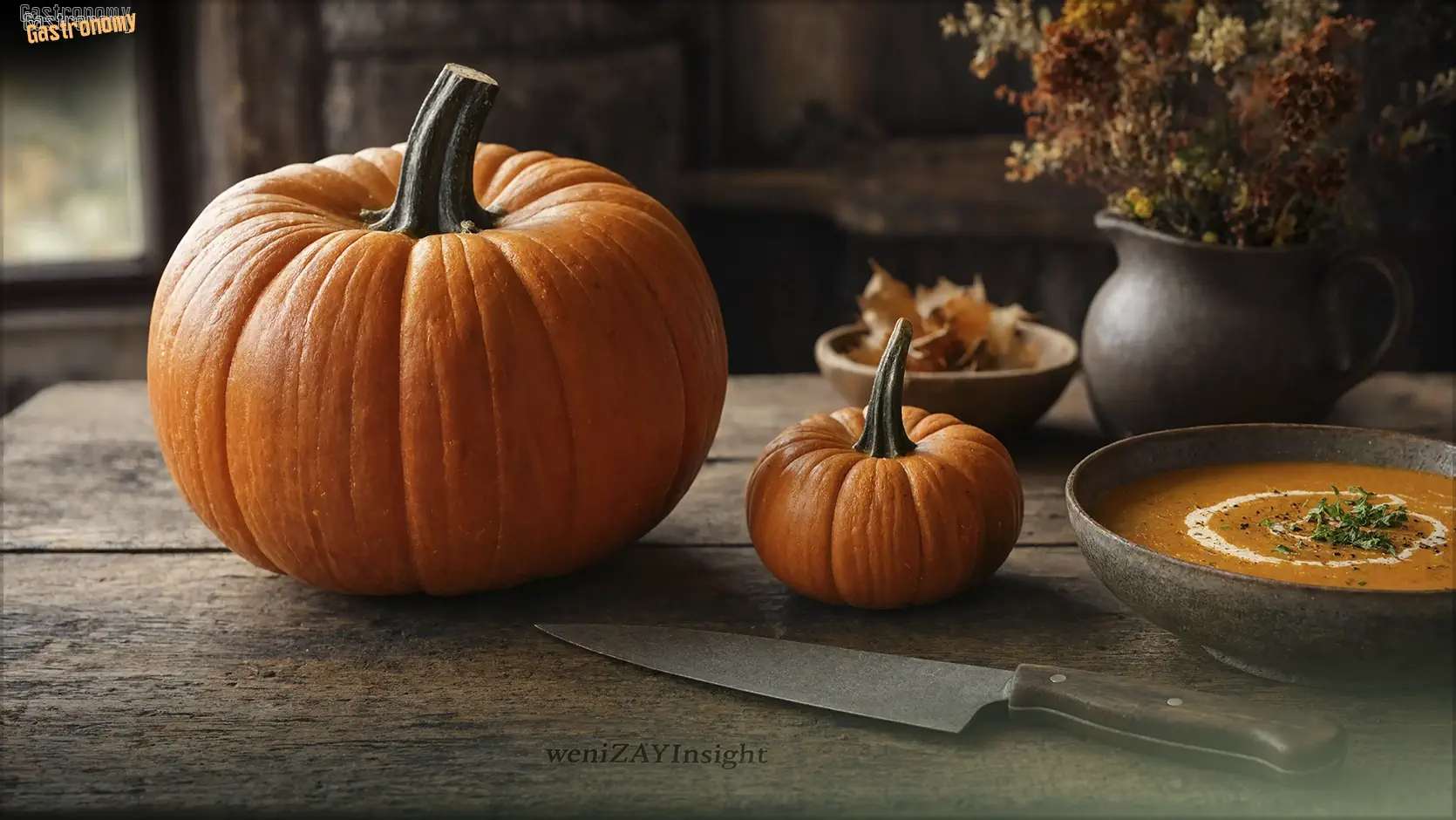
The Pumpkin That Lied to You
You buy the biggest, brightest pumpkin at the market. You roast it with high hopes, season it generously, and serve it to the family. And it tastes like... water. Bland, watery, slightly stringy water. You wonder what you did wrong. The answer is simple: nothing. You did everything right. You just cooked the wrong pumpkin.
The pumpkin on your porch and the pumpkin in your soup bowl are not the same vegetable. One was bred to be big, hollow, and structurally sound enough to hold a candle. The other was bred to be dense, sweet, and flavourful enough to hold a meal. They are cousins, not twins, and knowing the difference is the single most important skill in autumn squash cooking.
Why the Big Ones Taste Like Water
The classic jack-o'-lantern pumpkin — the large, deeply ribbed, bright orange squash you see on porches every October — is a cultivar bred for one purpose: size and structure. Its flesh is thin, watery, and fibrous, designed to support a large, hollow cavity for carving rather than to deliver flavour. It is not poisonous, and it is technically edible. But when cooked, it produces a bland, watery purée that no amount of butter, sugar, or spice can fully rescue.
By contrast, the sugar pumpkin (also called the pie pumpkin or sweet pumpkin) is a smaller, denser variety bred specifically for eating. Its flesh is thick, smooth, and naturally sweet, with a texture that roasts beautifully and purées into something silky. It is the pumpkin you want for pie, soup, roasting, and almost any savoury application.
A Field Guide to the Right Squash
When you stand in the market or the supermarket aisle, here is how to tell the edible squash from the decorative one.
The Varieties Worth Knowing
- Sugar pumpkin (pie pumpkin): Small, round, deep orange, 1–3 kg. Dense, sweet flesh. The best all-purpose cooking pumpkin. Look for it at farmers' markets and well-stocked grocers in autumn.
- Butternut squash: The tan, bell-shaped squash with smooth, golden flesh. Not technically a pumpkin, but a close relative. Sweet, nutty, and reliable. Excellent for roasting, soup, and purées. Available almost year-round.
- Kabocha squash: A Japanese variety with dark green, slightly bumpy skin and bright orange flesh. Denser and sweeter than most pumpkins, with a chestnut-like flavour. Exceptional for roasting and Japanese-style dishes.
- Hokkaido (Red Kuri) squash: A teardrop-shaped, deep red-orange squash with edible skin and sweet, chestnut-flavoured flesh. Excellent roasted whole or in wedges.
- Jack-o'-lantern (carving) pumpkin: Large, ribbed, hollow, and watery. Bred for decoration. Edible but bland. Avoid for cooking unless you have no other option.
- Spaghetti squash: The pale yellow, oblong squash whose flesh separates into noodle-like strands when cooked. Not a pumpkin in the culinary sense, but a member of the same family. Useful as a low-carb pasta alternative.
How to Choose at the Market
Once you know the variety, choosing a good individual squash is easy:
- Feel the weight: A good cooking squash feels heavy for its size. Heaviness means dense flesh. Lightness means a large hollow cavity and thin walls.
- Check the skin: The skin should be hard, matte, and free of soft spots or blemishes. A glossy skin often means the squash was picked too early and will not store well.
- Look at the stem: A dry, intact stem is a good sign. A missing or mushy stem means the squash may rot quickly.
- Tap it: A ripe squash sounds slightly hollow when tapped. If it sounds very dense and solid, it may be underripe. If it sounds very hollow and light, it may be overripe or dried out.
What to Do With Each Variety
Each squash has a best use. Matching the variety to the dish is the difference between good cooking and great cooking.
- Sugar pumpkin: The all-purpose cooking pumpkin. Roast it, purée it for soup or pie, fold it into pasta, or use it as a base for autumn soup.
- Butternut squash: The most reliable all-purpose squash. Roast it, blend it into soup, or use it in curries and stews. Its smooth texture makes it ideal for purées.
- Kabocha: Best roasted in wedges, where its dense, chestnut-like flesh caramelises beautifully. Also excellent in Japanese-style simmered dishes and tempura.
- Hokkaido: Roast whole or in wedges, skin on. Its edible skin and sweet flesh make it a low-effort, high-reward squash.
- Jack-o'-lantern pumpkin: Carve it, display it, and compost it. If you must cook it, use it in strongly flavoured dishes where the blandness will be masked — a heavily spiced curry, for example, or a soup with lots of garlic and herbs.
The Squash That Respects the Cook
The squash family is one of the oldest and most generous in the kitchen. It offers something for every season, every method, and every palate. But it also asks for something in return: attention. Attention to which variety you buy, attention to how you choose it, and attention to what you cook with it. When you give that attention, the squash rewards you with sweetness, depth, and the kind of autumn warmth that no decoration can provide.
So this autumn, when you stand in the market surrounded by pumpkins and squash, do not reach for the biggest, brightest one by default. Look for the small, dense sugar pumpkin. The tan, bell-shaped butternut. The dark green kabocha. These are the vegetables that were bred for your table, not your porch. They are the ones that will make your soup sing, your roast shine, and your autumn taste like autumn.
Для комментирования войдите или зарегистрируйтесь.