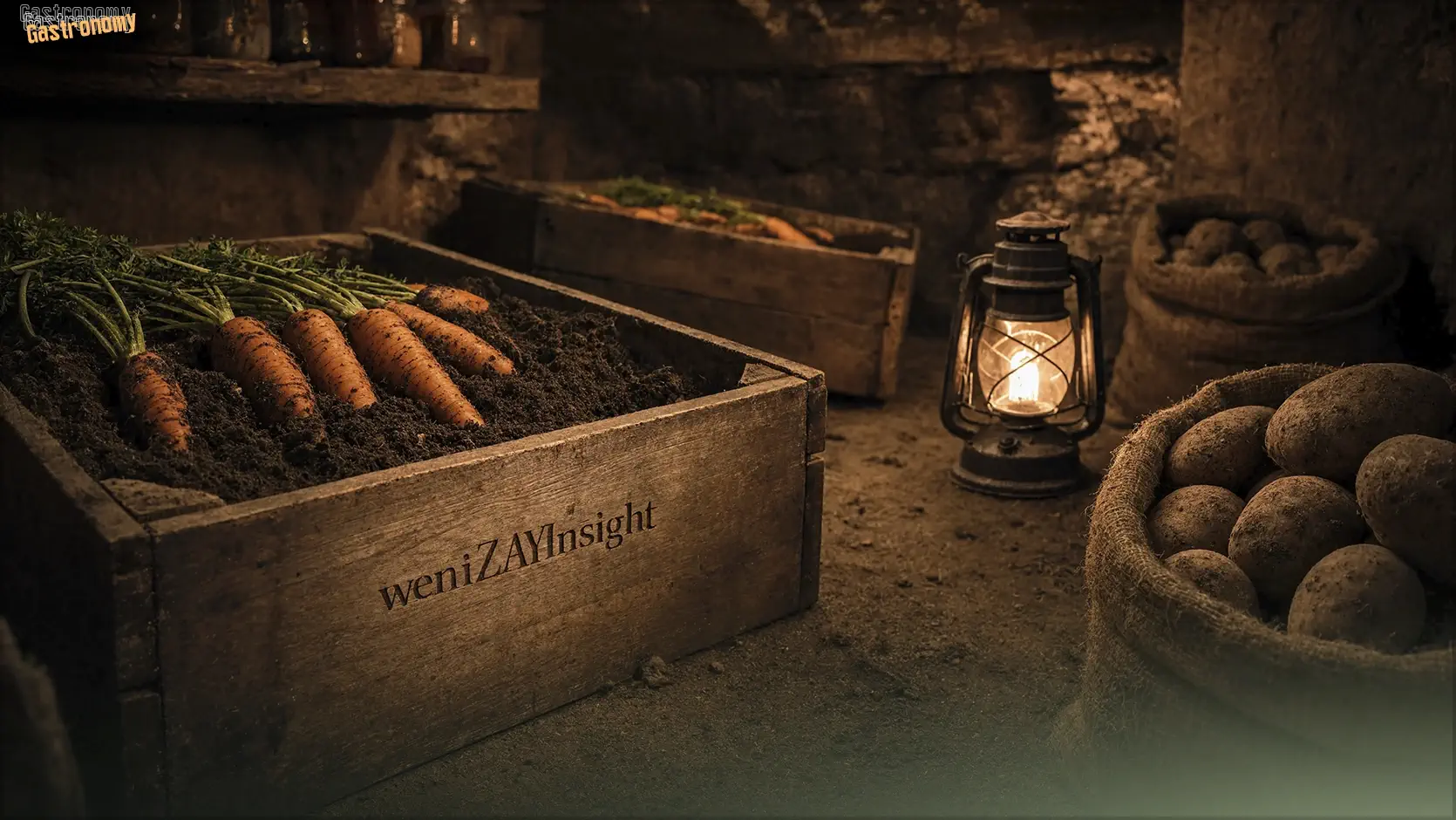
The Room Where the Earth Keeps Its Promises
Before the hum of the refrigerator became the sound of home, there was a different kind of cold storage — one that did not need electricity, one that did not hum, one that smelled of damp stone and quiet. It was a room, often underground, where the earth itself agreed to hold what you had grown. You did not freeze your harvest. You did not can it all into jars. You simply asked the ground: will you keep this safe until I am ready? And the ground said yes.
A root cellar is not a pantry. A pantry is a place you visit to take. A root cellar is a place you visit to wait. The carrots are not stored; they are resting. The potatoes are not kept; they are sleeping. The earth, cool and constant at four or five degrees, holds them in a state of suspended animation — alive enough to stay fresh, still enough to last until spring. It is the oldest form of trust between a gardener and the soil.
Why the Cellar Is Not Just Storage
In a world of instant delivery, where you can order beets from another continent and have them arrive tomorrow, the root cellar feels almost stubbornly slow. And that is exactly what it teaches. You harvest in autumn. You bury the carrots in damp sand in October. You do not eat them in October. You eat them in February, when the garden is bare and the ground is frozen, and the carrot tastes like a small miracle — sweet, crisp, alive, as if it never left the earth at all.
The cellar teaches you that some things are worth waiting for. That root vegetables are not just food — they are patience made edible. They store sweetness for the dark months. And the cellar is where that sweetness is kept safe, one layer of sand at a time.
Carrots in Sand: The Oldest Trick in the Cellar
The carrot is the most delicate of the storage roots. Left in a heap, it softens, shrivels, and rots within weeks. But buried in damp sand, it can last four, five, even six months — crisp, sweet, almost indistinguishable from one pulled fresh from the ground. The trick is not the cold alone. It is the sand.
Sand holds moisture without drowning the carrot. It creates a microclimate around each root, keeping the humidity high and the air still. The carrot does not dry out. It does not sweat. It simply rests, buried in its own small bed, waiting for the day you dig it out.
How to Store Carrots in Sand
- Harvest carefully: Lift the carrots on a dry day. Do not wash them. Brush off loose soil gently, but leave the skin intact. A bruised carrot will rot and spread the rot to its neighbours.
- Trim the tops: Cut the green tops off, leaving about a centimetre of stem. The greens draw moisture from the root and will shorten its life.
- Prepare the sand: Use clean, damp sand — damp like a wrung-out sponge, not wet. If you squeeze a handful, no water should drip out.
- Layer in a crate: In a wooden or plastic crate with drainage, lay a five-centimetre layer of sand. Place the carrots in a single layer, not touching. Cover with another five centimetres of sand. Repeat until the crate is full.
- Store in the cold dark: Keep the crate at four to six degrees Celsius, in a cellar, unheated garage, or cold corner. Check monthly. Remove any carrot that has softened or shows signs of mould before it spreads.
Potatoes: The Dark Needs No Sand, Only Silence
The potato is easier than the carrot but no less particular. It does not need sand. It needs two things: darkness and breath. Light turns potatoes green and bitter, producing solanine, a natural toxin. Warmth makes them sprout. Dampness makes them rot. But give them a cool, dark, well-ventilated space, and they will keep for months.
In the old cellars, potatoes were kept in burlap sacks or woven baskets, never in sealed plastic bags. The sack allowed the potatoes to breathe. The darkness kept them pale and sweet. And the earth, cool beneath the floor, held the temperature steady even when the world above was frozen solid.
Beets, Turnips, and the Quiet Ones
Beets and turnips fall somewhere between the carrot and the potato. Like carrots, they benefit from sand, though they are less fussy. Like potatoes, they need the dark. Store them the same way — trimmed of greens, layered in damp sand, kept at four degrees — and they will last through the winter.
These are the quiet preserves of the cold months. They do not announce themselves. They do not sparkle like a jar of jam. But in February, when the garden is a memory and the market is thin, a beet pulled from the sand is a small act of faith rewarded.
The Patience of the Cellar
There is a reason the root cellar feels almost sacred. It is not just a storage method. It is a relationship with time. You harvest in the light of autumn. You bury the roots in the dark of the cellar. You wait through the long, cold months. And when you finally dig a carrot out of the sand in February, you are not just eating a vegetable — you are eating the patience of October, held safe by the earth, waiting for the day you were ready.
In a world that wants everything now, the cellar asks you to wait. And in the waiting, something happens that no delivery app can offer: the food tastes like time. It tastes like trust. It tastes like the earth keeping a promise it made in autumn and honoured through the long, quiet dark of winter.
Для комментирования войдите или зарегистрируйтесь.