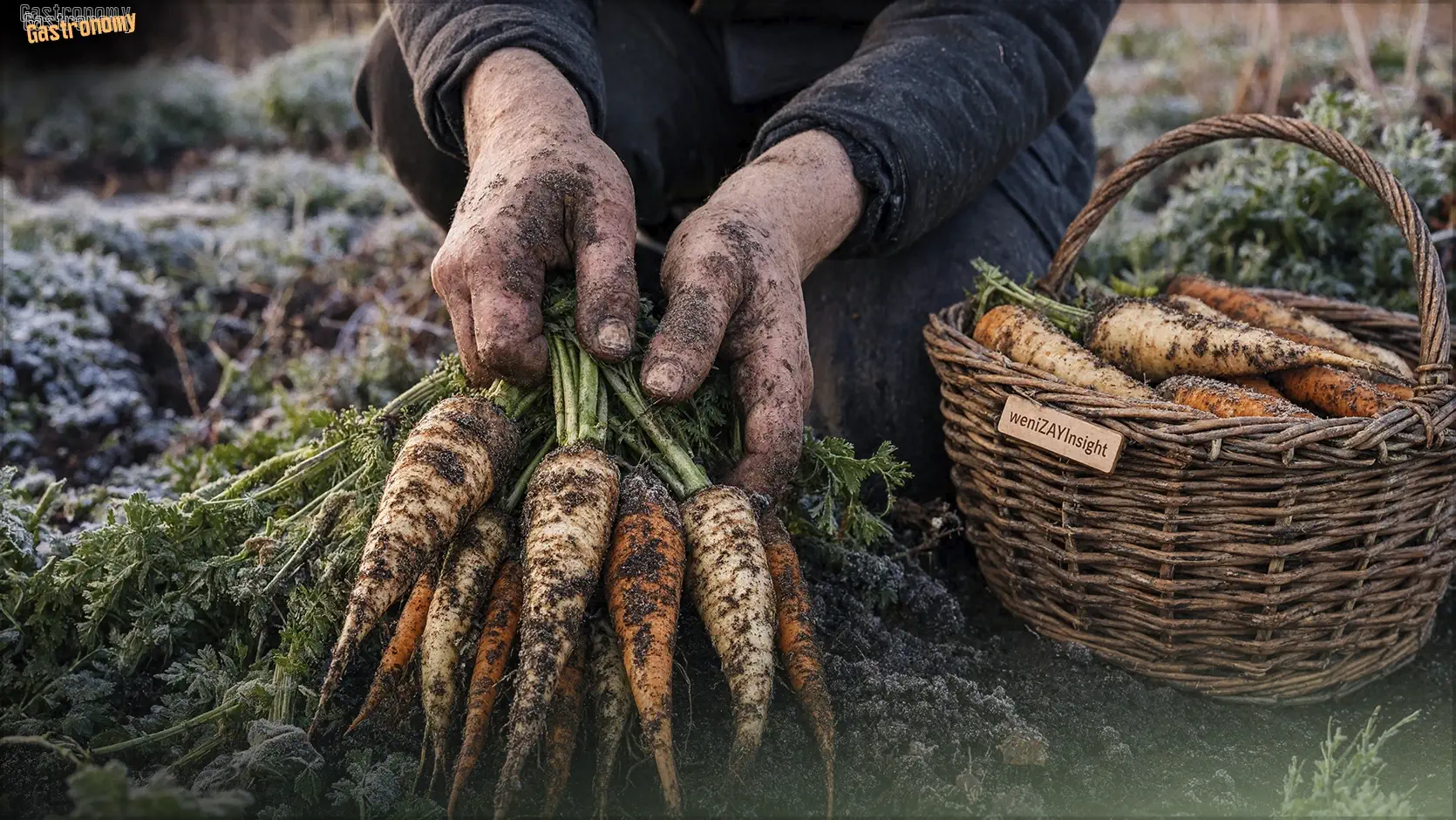
The Alchemy of the Dark Earth
There is a specific, heavy silence that belongs only to the soil in late November. Above ground, the garden is a graveyard of frost-blackened leaves and brittle, dying stalks. The world looks finished. But beneath the surface, in the absolute, undisturbed dark, the root vegetables are doing their quietest, most profound work. They are not dying; they are preparing.
We are conditioned to look for growth in the light. We celebrate the rapid, upward reach of the spring shoot and the bright, sun-drenched swelling of the summer tomato. But the autumn root teaches us a different kind of growth. It grows inward. It grows downward. It draws the chaotic energy of the sun down into the quiet dark and condenses it into something dense, enduring, and profoundly sweet.
The Science of Cold-Sweetening
When the air temperature drops and the first hard frost bites the soil, a remarkable biological imperative takes over. To keep its cellular walls from freezing and rupturing in the cold, the plant begins converting its stored starches into sugars. Sugar acts as a natural antifreeze. This process, known as cold-sweetening, is a survival mechanism, but to the human palate, it is nothing short of a miracle.
A carrot pulled in the heat of August is woody, sharp, and merely functional. A carrot pulled from the frozen ground in December tastes like butterscotch and damp soil. The frost did not ruin the vegetable; it taught it how to survive, and in doing so, it gave us a flavor that cannot be rushed or replicated in a greenhouse.
Indigenous Wisdom and the Subterranean Harvest
In Indigenous agriculture, the relationship with the earth is not extractive; it is deeply reciprocal. The foodways of Native American cultures have long understood that a holistic harvest requires honoring both the sky and the soil. While the famous Three Sisters—corn, beans, and squash—capture the sun in a masterclass of above-ground symbiosis, the subterranean crops hold the foundation.
The subterranean harvest of native tubers, such as the Jerusalem artichoke (sunchoke) and various wild roots, represents the earth's memory. Indigenous wisdom recognizes that what is hidden beneath the soil is just as vital as what reaches for the light. The roots store the energy of the summer safely underground, waiting for the right moment to sustain the people through the long, dark winter. To eat these roots is to participate in an ancient, respectful dialogue with the land.
The Practice of Cooking the Dark
To cook dark-grown food is to honor the patience it took to grow. It requires a departure from the modern obsession with bright, acidic, and instantaneous flavors. Here is how to treat the quiet dignity of the autumn root:
- Scrub, do not peel: The skin of a root vegetable is its interface with the earth. It holds the deepest concentration of flavor and nutrients. A gentle scrub under cold water is all that is needed.
- Apply high heat and time: Roasting is the only proper method for a winter root. Toss them in a heavy fat (duck fat, tallow, or olive oil) and let them caramelize in a hot oven until the edges are deeply browned and the centers are meltingly soft.
- Balance with acid: The deep, earthy sweetness of a roasted turnip or parsnip needs a counterpoint. A splash of apple cider vinegar or a squeeze of lemon juice at the end of roasting lifts the heavy flavors and brightens the dish.
- Eat slowly: These are not vegetables to be rushed. Let the dense, starchy warmth ground you before you return to the frantic pace of the day.
Nourishment from the Underground
When you sit down to a bowl of roasted roots in the dead of winter, you are eating the earth's own slow, unhurried patience. You are consuming the quiet dark. In a world that constantly demands we reach for the light, move faster, and produce more, the root vegetable asks only that we wait, that we endure the cold, and that we trust the process happening out of sight. It is a humble, heavy meal, but it is one that anchors the soul.
Для комментирования войдите или зарегистрируйтесь.