The Cathedral You Can Walk Into
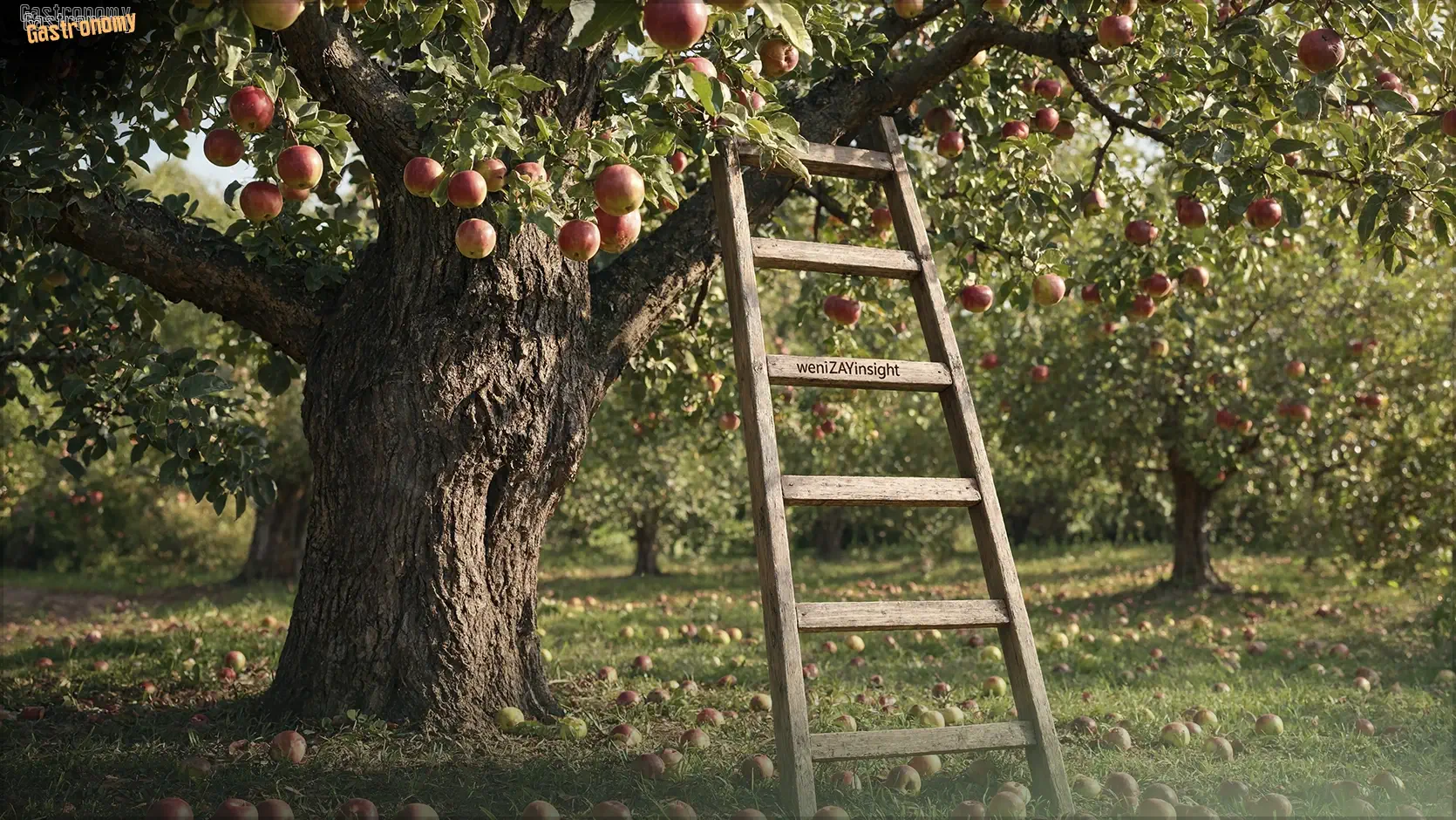
There is a moment in October when the orchard stops being a farm and becomes something else. The light comes in low and gold, catching the sugar on the skins. The branches hang heavy, bending under the weight of fruit that has spent six months turning sunlight into sweetness. The air smells of fallen apples and warm earth. And if you stand very still, in the middle of a good orchard on a good autumn afternoon, you understand why people have been calling these places sacred for centuries. It is not religion. It is just that some things are so clearly, quietly perfect that the only honest word for them is holy.
An apple orchard in October is the closest thing we have to a cathedral made of sugar and light. And the science of how that sweetness arrives — the slow, patient alchemy of ripening — is a lesson the season is trying to teach us, if we are willing to slow down and listen.
The Chemistry of Patience
An apple does not simply become sweet. It is made sweet, slowly, by a process that cannot be rushed. In the summer months, the tree sends starch to the fruit — dense, flavourless starch, the same substance in a raw potato. The apple hangs on the branch, hard and tart, accumulating this starch like a savings account. And then, as the days shorten and the nights cool, something changes.
The apple begins to produce ethylene gas — a natural plant hormone that acts as a ripening signal. Ethylene tells the apple's cells to convert their stored starch into sugar. Slowly, over days and weeks, the starch breaks down. The fruit softens. The acidity mellows. The flesh turns from chalky to crisp, from tart to sweet. It is not magic. It is chemistry. But it is chemistry that only works on the orchard's clock, not ours.
Why Heritage Varieties Ripen Differently
The supermarket apple is bred for one thing: consistency. It must ripen evenly, ship without bruising, and look identical in every store. To achieve this, commercial varieties are often picked early, while still hard and starchy, and then ripened artificially in storage rooms flooded with ethylene gas. The result is an apple that looks ripe but never quite tastes like one.
Heritage varieties work differently. A Cox's Orange Pippin, the great English apple, does not ripen on a factory schedule. It ripens on its own clock, often unevenly, sometimes over weeks. It is fragile. It bruises easily. It does not travel well. But what it has — what no commercial variety can replicate — is depth. A Cox's Orange Pippin in full ripeness tastes of honey and citrus and something floral, something that cannot be bottled or explained. It is the taste of a slow autumn, held in a single fruit.
In America, the Honeycrisp tells a similar story. Bred for flavour rather than shipping, it is prone to bitter pit, difficult to grow, and expensive to harvest. But bite into one fresh from the tree, and the flesh explodes with juice — sweet, tart, crisp, alive. These apples are not just better. They are ripened on a slower clock, and you can taste the difference.
How to Choose an Apple That Has Truly Ripened
- Look for colour at the stem: A truly ripe apple will show its final colour near the stem, not just on the side facing the sun. If the stem area is still green, the apple was picked early.
- Smell the stem end: A ripe apple will smell sweet and floral at the stem. If it smells of nothing, it is starchy inside, no matter how red the skin.
- Press gently near the stem: The flesh should give slightly under pressure. If it is rock hard, it was picked too soon. If it is mushy, it is overripe.
- Check the seeds: If you cut one open, ripe apples have dark brown seeds. Pale or white seeds mean the fruit was harvested before it finished ripening on the tree.
Keeping the Cathedral Alive: Storing Apples for Weeks
The apple's ripening does not stop when you pick it. It continues, slowly, driven by the ethylene it produces. This is both the problem and the solution. Left at room temperature, an apple will ripen, soften, and eventually spoil within a week. But stored correctly, it can stay crisp and sweet for months.
The key is cold and humidity. Apples store best at zero to four degrees Celsius, in a humid environment. The classic method is a plastic bag with a few holes punched in it, kept in the crisper drawer of the refrigerator. The bag holds in moisture; the holes let the apple breathe. Stored this way, a good heritage apple will stay crisp for four to six weeks. Some varieties, like the old English Bramley, can last until March.
Cooking With Heritage Apples
The heritage apple is not just for eating raw. Its complexity — the balance of sweet, tart, and floral — makes it extraordinary in the kitchen. A Cox's Orange Pippin baked whole becomes a small, fragrant revelation. A Bramley, sharp and acidic, collapses into the perfect crumble filling. And when the orchard's last windfall apples are pressed, they become cider — the orchard's memory of summer, fermented into something the dark months understand.
When you cook with a heritage apple, you are not just making a dish. You are honouring a variety that someone, somewhere, decided was worth saving. The old orchards of England, the abandoned farmsteads of New England, the backyard trees of grandparents who knew the name of every apple they grew — these are living archives. And every time you choose a Cox's over a supermarket apple, you are voting for that archive to survive.
The Invitation of the Orchard
An apple does not ripen because you want it to. It ripens when the tree is ready, when the starch has become sugar, when the cool nights have done their work. You can stand in the orchard and wish the fruit were sweeter, softer, more ready — but it will not hurry for you. And in that waiting, the orchard teaches you something the rest of the year forgets: that the best things arrive on their own clock, and that patience is not the absence of progress. It is the condition for sweetness.
So go to the orchard in October. Walk slowly. Let the light catch the sugar on the skins. Pick an apple that is ready, not one you wish were ready. Bite into it standing up, in the middle of the cathedral, and taste the six months of sun, the six weeks of cool nights, the quiet work of ethylene turning starch into sweetness. It will taste like time. It will taste like patience. It will taste like the earth keeping a promise it made in the spring.
Для комментирования войдите или зарегистрируйтесь.