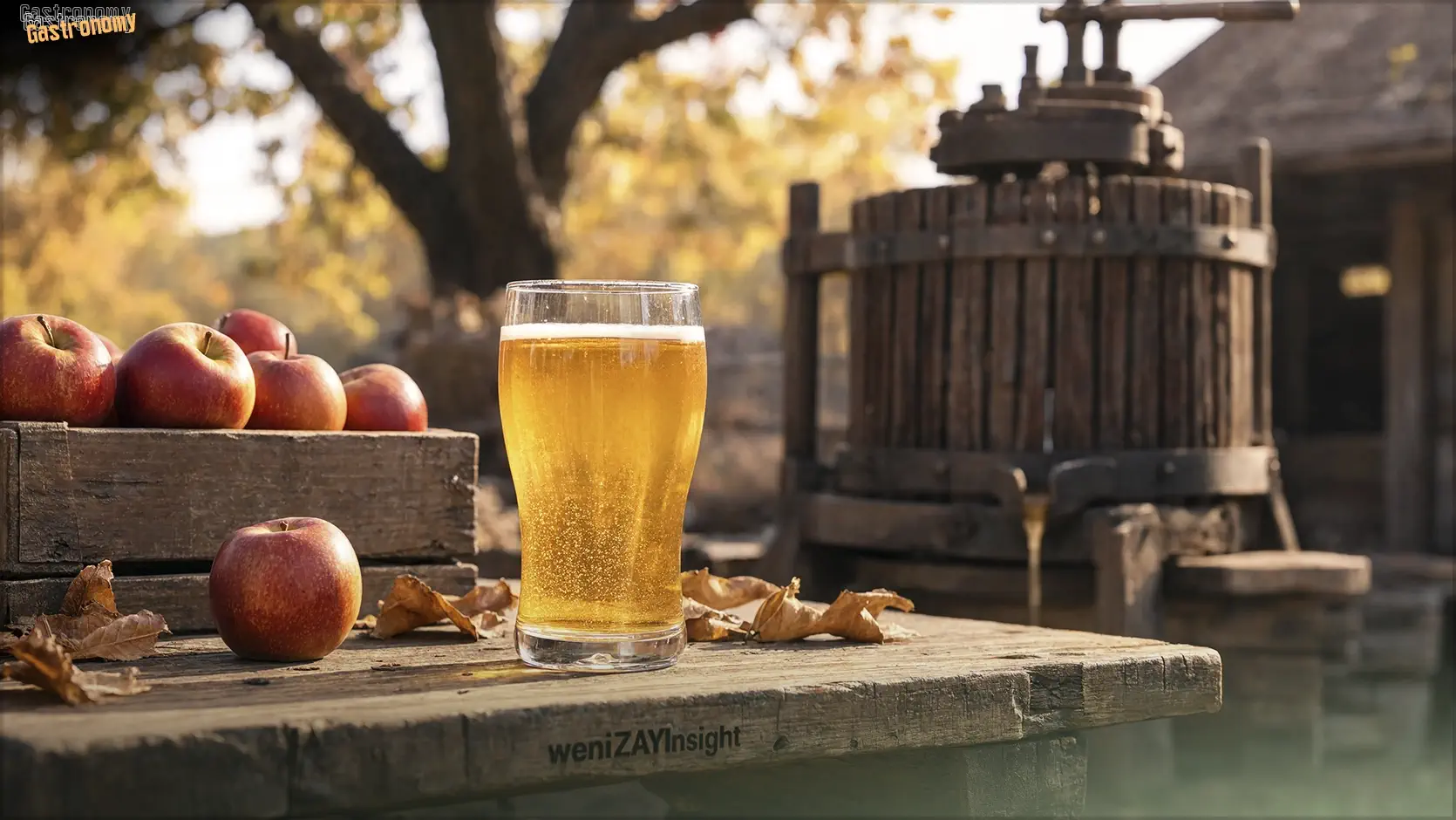
The Alchemy of the Fallen Apple
There is a specific sound that marks the true end of the orchard year: the heavy, hollow thud of ripe fruit hitting the damp earth. The apples do not wait to be picked politely from the branch. They fall, bruised, muddy, and entirely imperfect. To the uninitiated, this looks like waste. But to the cider maker, this is the raw material of memory. The orchard is not dying; it is offering up its living library of flavours for one final, transformative act.
The press groans. The wooden slats creak under immense pressure. The juice that runs out is not clear or polite; it is cloudy, tannic, and fiercely alive. It smells of damp bark, bruised sweetness, and the sharp, metallic tang of the coming frost. This is not a beverage designed for a summer picnic. It is a drink engineered for the dark months, built to sit in a glass and slowly unravel the story of the year that just passed.
From Sweetness to a Sharper Truth
Apple juice is a child's drink: sweet, immediate, and fleeting. But juice cannot survive the winter. If left alone, it will simply rot. To preserve the orchard, you must surrender it to the wild yeasts that live on the skin of the fruit. This is the ancient, patient art of trusting that decay, given time, becomes something new.
As the weeks grow shorter and the air turns cold, the bubbling in the fermentation vessel slows. The sugar is eaten, the alcohol rises, and the flavor profile shifts from a simple sweetness to a complex, astringent depth. The cider becomes dry, funky, tannic, and honest. It loses its innocence, but it gains its soul.
A Geography of the Glass
The taste of autumn cider is never universal; it is deeply, stubbornly local. It is the liquid expression of a specific patch of earth and the people who tend it.
In the damp, heavy clay soils of the English West Country, Somerset scrumpy reigns supreme. It is rough, cloudy, unfiltered, and often served from an unlabeled jug. It tastes of the farmyard and the hedgerow—a heavy, rustic drink that demands to be paired with a hearty autumn meal or shared around a roaring fire. There is no pretense here. The haze in the glass is the orchard's fingerprint.
Cross the ocean, the tradition shifts. In the crisp, high-altitude orchards of New Zealand, New Zealand perry (made from fermented pears) and modern artisanal ciders reflect a brighter, cleaner light. The fruit is often sharper, the fermentation more controlled, resulting in a drink that is vibrant, acidic, and deeply refreshing, yet still carrying the unmistakable weight of the harvest.
In North America, the hard cider revival has brought forgotten heritage apples back from the brink of extinction. Varieties like the Kingston Black or the Dabinett, once bred specifically for tannin and acid rather than eating, are finally being allowed to tell their true story in the glass.
The Ritual of the Press
Whether you are pressing a few bushels in your own backyard or simply buying a bottle from a local farm, the philosophy of cider remains the same. It is a four-part ritual of letting go:
- The Gathering: You collect what the earth has already dropped. You do not pick the perfect fruit; you accept the bruised and the fallen, knowing that perfection makes for boring wine.
- The Crushing: The fruit is broken down completely. The cell walls are shattered so the juice can escape. There is no way to make cider without first destroying the apple.
- The Waiting: You seal the vessel and you wait. You cannot rush fermentation. You must simply trust the temperature, the wild yeast, and the passage of time.
- The Tasting: You drink the result. It will taste different every single year. Some years it will be sharp and lean; other years it will be round and generous. You drink the weather of that specific year.
The Final Pour
As November deepens and the last of the leaves are stripped from the trees, the orchard stands bare. But the harvest is not gone. It is waiting in the cellar, in the barrel, in the bottle. When you pour a glass of hard cider on a freezing evening, you are holding the orchard's memory in your hands. You are drinking the sunshine of July, the rain of September, and the hard labor of October, all transformed into something that can withstand the January dark. It is the final, beautiful agreement between the land and the people who tend it: we will not let the season disappear. We will simply change its form.
Для комментирования войдите или зарегистрируйтесь.