The Lie We Were Taught About Love
Most of us learned the same quiet lesson in childhood: love means unlimited access. Say yes. Stay available. Give until it hurts, and then give a little more to prove the hurt didn't count. Saying no was framed as coldness. Needing rest was framed as selfishness. And so we grew up believing that every limit we set was a small act of rejection — that the people we love deserved every room in the house, every hour of the day, every last reserve of our energy.
It takes years, and usually a few quiet collapses, to suspect that the lesson was wrong. Because here is what unlimited access actually produced: exhaustion dressed up as devotion, resentment smiling through clenched teeth, and a strange, growing numbness in the exact places where love was supposed to live. It turns out that giving everything away is not generosity. It is slow self-abandonment.
The Garden Without a Gate
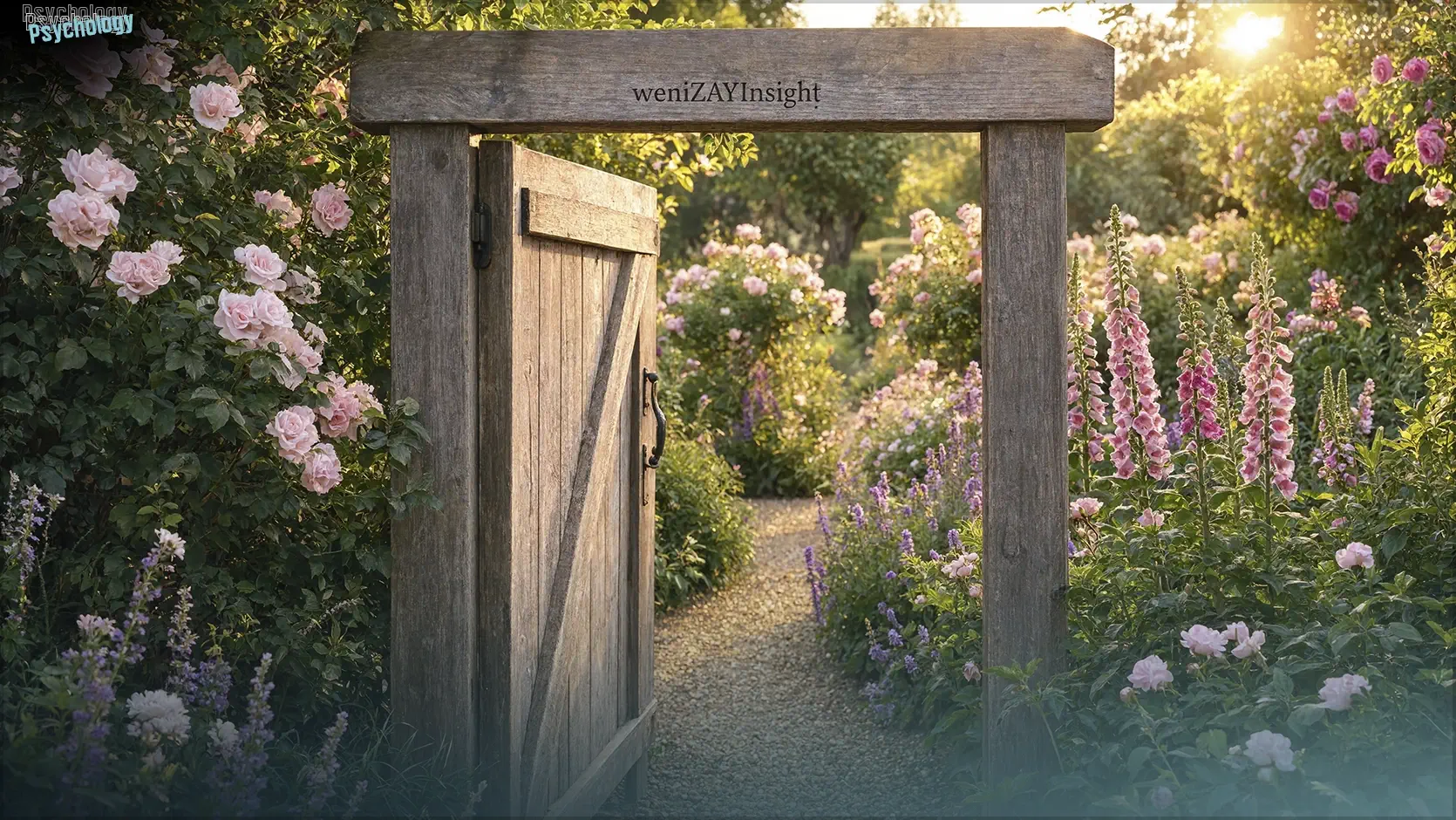
Imagine a garden with no fence and no gate. Anyone may wander in. Strangers pick the flowers before they bloom. Someone parks a car on the flowerbeds. Someone else lets their dog dig up the beds. The gardener still tends the soil, still plants, still waters — but nothing gets the chance to root, because everything is constantly being trampled.
This is what a life without psychological boundaries looks like from the inside. You are not unloving. You are un-gated. And a garden without a gate is not generous; it is just a public thoroughfare. The flowers — your creativity, your patience, your capacity for joy — never get the protected time they need to grow.
What a Boundary Actually Is
A boundary is not a punishment. It is not an ultimatum, and it is not something you do to another person. A boundary is simply information: it is the honest announcement of where you end and where someone else begins. It says, "I care about you, and here is what I need in order to keep caring well."
This reframing changes everything. Setting a limit stops being an act of rejection and becomes an act of architecture. You are not pushing people away; you are building the conditions under which closeness can survive. Because the alternative is well documented: a person who never says no eventually says a very large, permanent, silent no — and disappears from the relationship entirely.
The Four Gates Worth Building First
If you have spent a lifetime as a public thoroughfare, do not try to wall off everything at once. Start with four gates:
- The gate of time: your evenings, your rest, your attention are not public property. "I can't tonight" is a complete sentence, and it owes no one a court case of justification.
- The gate of emotion: you can hold space for someone's feelings without becoming the storage unit for them. Compassion with a gate looks like love; compassion without a gate looks like drowning together.
- The gate of access: your phone, your inbox, your immediate reply. Availability on demand is not intimacy; it is servitude with a warm name.
- The gate of the body: sleep, food, quiet, movement. The body keeps the accounts, and it always presents the bill eventually.
Why the Gate Deepens Love
Here is the part that surprises people: protecting your energy does not shrink your capacity for love. It rescues it. Every yes that actually means no is a small lie told to the person you love, and lies — even kind ones — thin the bond. Every suppressed resentment is a brick quietly mortared into a wall. And walls, unlike gates, keep everyone out, including the one who built them.
This is where honest self-observation helps. The part of you that panics at the sound of the word "boundary" is rarely your adult self. It is an older, younger part — often the same exiled part you might meet in the figures of your shadow — the one who learned long ago that saying no meant being abandoned. It is not your conscience speaking when guilt flares. It is an old survival program, still running.
Building With Love
The people who only loved you when you had no gate will struggle with the gate. That is painful, and it is also the truest sorting mechanism a relationship has. The people who love you — not your exhaustion, not your usefulness, not your endless availability, but you — will adjust. Some will even thank you, quietly, because your honesty gives them permission to build their own gate too.
A garden with a gate is not a fortress. The gate opens. Guests are welcomed, genuinely welcomed, into a place where things actually grow — where the flowers had time to bloom, where the soil was tended, where the gardener chose them rather than merely failed to stop them. That is what setting boundaries buys you in the end: not isolation, but the difference between being chosen and being merely available. Love grows best behind a gate — because it knows it is safe there.
Для комментирования войдите или зарегистрируйтесь.