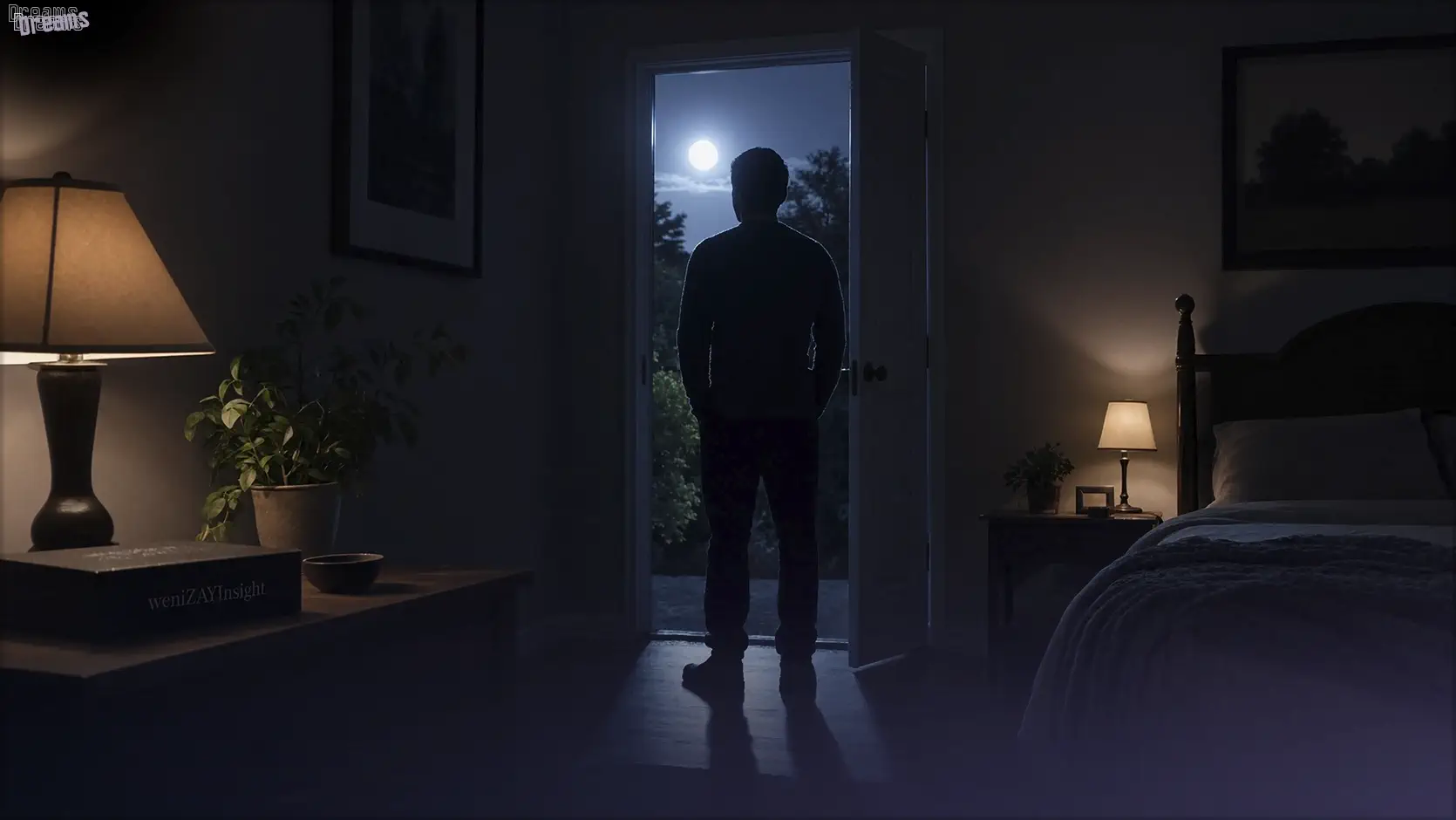
The Stranger Who Knows Your Name
You know the figure. It stands at the far end of the dream street. It is the pursuer who never quite catches you, the stranger already seated in your dream-kitchen as if it has always lived there, the dark shape at the edge of the bed that vanishes the moment you look at it directly. You wake with your heart hammering, relieved that it was only a dream. But Carl Jung would gently correct you: it was only a dream the way a letter is only paper. Something sent it.
Jung called that something the shadow — "the thing a person would rather not be." Not a demon. Not a diagnosis. Simply everything you had to cut away in order to be loved, acceptable, and safe: the anger, the neediness, the wildness, the ambition, the tenderness you were told was too much. You did not destroy those parts. You locked them in the basement. And then you forgot to feed them.
What the Shadow Is — and What It Is Not
The shadow is not the monster under your bed. That is the childhood version of the story. The adult truth is quieter and far stranger: the shadow is made of unlived life. Every trait you swallowed, every desire you apologized for, every talent you decided was impractical — none of it died. It went underground. And underground, in the dark, it got hungry.
This is why shadow work is not about becoming darker. It is about becoming whole. Jung famously said he would rather be whole than good. The shadow also carries gold: the confidence you were told was arrogance, the creativity you were told was frivolous, the voice you were told was too loud. When you exile a part of yourself, you exile its gifts along with its dangers.
Why the Unconscious Speaks at Night
During the day, the ego stands guard at the door. It edits, polishes, and presents a self the world can tolerate. But at night, in deep sleep, the guard goes home. The unconscious mind — which Jung saw not as a rubbish bin but as a wise, compensating partner — begins to speak in the only language it has left: images. That is why dream interpretation, for Jung, was never a fixed dictionary. A snake, a house, or a flood does not mean the same thing in two different lives. The dream speaks personally, and it speaks about what the daytime self refuses to see.
And the recurring dream — the chase that returns every few months, the same dark figure waiting in the same hallway — is simply the unconscious repeating a message that has not yet been received. The dream does not repeat because it is cruel. It repeats because you have not yet turned around.
The Figures the Shadow Wears
In Jungian psychology, dream figures are rarely random. They are delegates. These are the most common masks the shadow wears:
- The pursuer: Usually an avoided feeling, conversation, or truth. The chase softens the moment you stop running and ask, even inside the dream: what do you want from me?
- The stranger in the house: The house is you. An unknown room or an unexpected resident points to an unexplored region of your own personality — a part of you that has been living there all along.
- The monster: A fear or feeling that was never given a name. Monsters shrink astonishingly when named, because a name is the first act of relationship.
- The dazzling stranger: The golden shadow. A dream figure who possesses everything you admire is often carrying a disowned gift of yours — confidence, desire, talent — that you never permitted yourself to claim.
How to Meet Your Shadow Without Fear
Meeting the shadow is not an exorcism. It is a dinner invitation. The goal was never to defeat the dark figure at the foot of the bed; the goal is to learn its name, hear its request, and give the exiled part some honest, waking expression in your life. Like any deep transformation, it asks for the same slow patience as fermentation: you are trusting that what was buried, given time and warmth, becomes something new.
Setting a Place at the Table
Integration looks disappointingly ordinary from the outside. It looks like finally saying the difficult sentence. Like resting without apologizing. Like letting the too-loud voice sing once, in the car, with the windows down. It is the shadow, fed at last, no longer needing to break into your sleep to be heard.
When the exiled parts are given a seat, the nightmares lose their charge. The pursuer slows to a walk. The stranger in the kitchen looks up and, for the first time, has a familiar face. It was never a monster. It was a guest — the one you locked in the basement, the one who waited, hungry, for you to remember the way down the stairs.
Для комментирования войдите или зарегистрируйтесь.