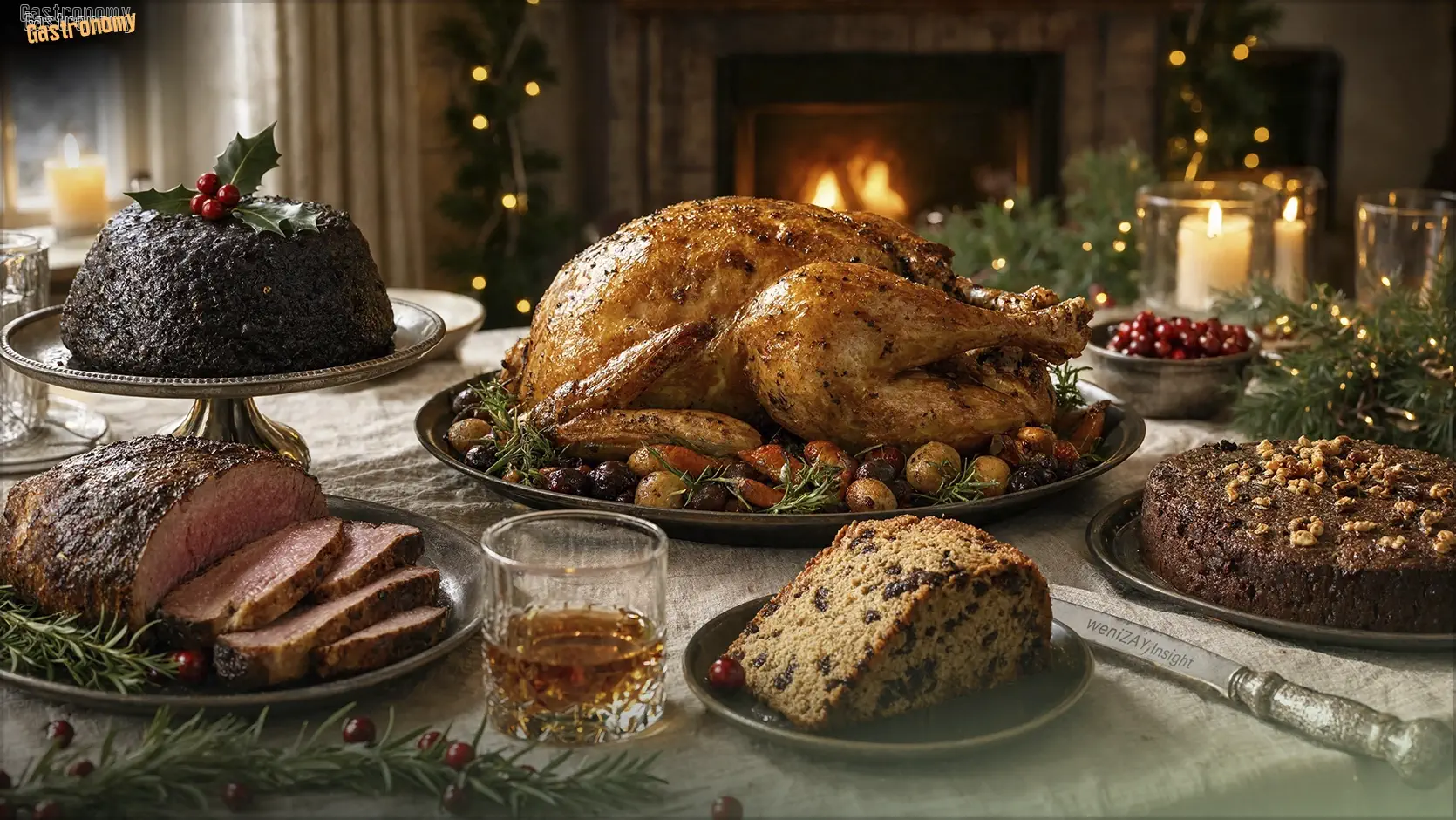
A Season That Starts in November
If you want to understand an Irish Christmas, do not look at the twenty-fifth of December. Look at the weeks before it. Look at the beef going into its dark, clove-scented cure. Look at the Christmas pudding, made on a Sunday and wrapped away to mature. Look at the dried fruit soaking in cold tea for the barmbrack. Nollaig — the Irish Christmas — is not a single day. It is a season that announces itself early, one dish at a time, and that asks every household to begin preparing while the autumn is still fading.
This is the great difference between a holiday and a season. A holiday happens. A season is built. And the Irish table builds its season with food that requires time — cured, rested, soaked, and aged — so that by the time the candles are lit, the table is not just set. It is completed, layer by patient layer, over weeks.
Spiced Beef: The First Signal
The season opens with spiced beef — the dish that must begin a fortnight before it can be eaten. Rubbed in salt, brown sugar, cloves, and juniper, then pressed and left to cure, it is the first act of preparation and the clearest statement of what Nollaig values: patience. Serving it cold and thin, with stout and brown bread, is the table's quiet declaration that the season has begun.
Christmas Pudding: The Dish That Rests
No Irish Christmas table is complete without Christmas pudding — the dense, dark, brandy-fed pudding that is made weeks ahead and left to mature. Suet, dried fruit, breadcrumbs, and spice are mixed, steamed, then wrapped and stored, growing richer with every passing day. On Christmas Day it is steamed again, turned out, and often flamed with a little whiskey or brandy. It is the dish that proves waiting improves things — and that some of the best food is the food you made and then left alone.
Barmbrack: The Bread That Tells Fortunes
Where most fruit breads are simply sweet, barmbrack is mysterious. Traditionally baked with objects hidden inside — a ring, a coin, a pea, a rag — it doubles as a fortune-telling loaf. Whoever finds the ring will marry; the coin means wealth; the rag, a difficult road ahead. It is tea-soaked, spiced, and studded with raisins, and it is served in thick slices with butter. Barmbrack carries a whisper of Samhain in it — the older, darker festival when the veil thinned and food was left out for the dead.
The Goose: The Centre of the Table
Before turkey crossed the Atlantic and claimed the Christmas table, Ireland roasted a goose. A goose is a serious bird — larger, darker, richer than a turkey, with a deep, savoury fat that perfumes the whole house. Roasting one is an event in itself, and carving it at the table is the moment the feast officially begins. For many Irish families, the goose remains the truest, oldest centrepiece of the Nollaig spread.
Whiskey Cake: The Final Sweetness
The table closes with whiskey cake — a rich, fruit-laden cake soaked in Irish whiskey, dense enough to keep for days, warming enough to end a long meal. It is not delicate. It is generous. It is the taste of the evening slowing down, of people lingering, of a season reaching its fullest and most contented point.
The Recipe: Barmbrack
What you need:
- 350 g strong white flour
- 1 tsp mixed spice
- A pinch of salt
- 7 g dried yeast
- 250 g mixed dried fruit (raisins, sultanas, currants)
- 300 ml warm black tea
- 75 g brown sugar
- 1 egg
- Butter, for the tin and serving
How to make it:
- Soak the fruit: the day before baking, cover the dried fruit with the warm tea and leave overnight. The fruit should plump and absorb the tea.
- Make the dough: mix the flour, mixed spice, salt, and yeast. Add the soaked fruit (and any remaining tea), the brown sugar, and the egg. Mix to a soft, sticky dough.
- First rise: cover and leave in a warm place for about an hour, until roughly doubled.
- Shape and rest: turn the dough into a buttered loaf tin and leave to rise again for 30–40 minutes.
- Bake: at 180°C (350°F) for 45–50 minutes, until deep golden and hollow-sounding. Cool on a wire rack.
- Serve: slice thickly and butter generously. It is best the day after baking, when the flavours settle.
The Table That Holds the Season
Look at the Nollaig table as a whole and you see the shape of the season itself. The cured beef marks the beginning. The resting pudding marks the middle. The barmbrack carries the old memory of Samhain. The goose is the feast at its fullest. And the whiskey cake is the long, warm ending. Together, they are not just dishes. They are the stages of a season — each one requiring time, each one asking the household to prepare, to wait, and to remember.
This is what Nollaig tastes like, in the end: not a single flavour, but a slow accumulation. Curing and resting, soaking and aging, roasting and warming — all of it gathered onto one table, so that when the day finally comes, the feast tastes like every day that led to it.
Для комментирования войдите или зарегистрируйтесь.