The Bargain
Curing is one of the oldest conversations between people and food, and it has always been a bargain. You give the food salt, sugar, and time. In return, it gives you something it could never have become on its own: depth, keeping quality, and a flavour that no amount of cooking could produce. Fresh salmon becomes silken gravlax. Beef brisket becomes fragrant salt beef. Pork shoulder becomes spiced, sliceable, and profound. None of this happens quickly. None of it happens by force. It happens because you agreed to wait.
For many people, curing sounds intimidating — something done by professionals with smokehouses and curing chambers. But at its heart, home curing is one of the simplest techniques in the kitchen. It requires no heat, no special machinery, and very little skill. It requires only three ingredients and the willingness to let time do the work. This guide will give you the science, the ratios, and the safety rules — and then it will hand you your first cure.
The Science, Made Gentle
Curing works because of what salt and sugar do at the surface of food, and what time does to the whole thing.
Salt is the engine. It draws moisture out of the food through osmosis, creating an environment where harmful bacteria struggle to survive, while encouraging the good, flavour-building changes. It also alters the structure of the proteins, giving cured fish and meat their characteristic firm, silky texture.
Sugar is the balance. It tempers the harshness of the salt, adds depth, and feeds the slow chemical reactions that develop flavour. In many cures, sugar is nearly half the mixture — not for sweetness, but for roundness.
Time is the transformer. Over hours and days, the salt-and-sugar mixture penetrates the food, seasoning it to the core and slowly changing its texture and taste. The longer the cure, the deeper the transformation. This is the same principle behind the long-cured spiced beef — the dish that tastes of patience because it was made with it.
Three Cures to Know
Almost everything you will ever cure at home falls into one of three families. Start simple, and work your way up.
1. Gravlax — the gateway cure
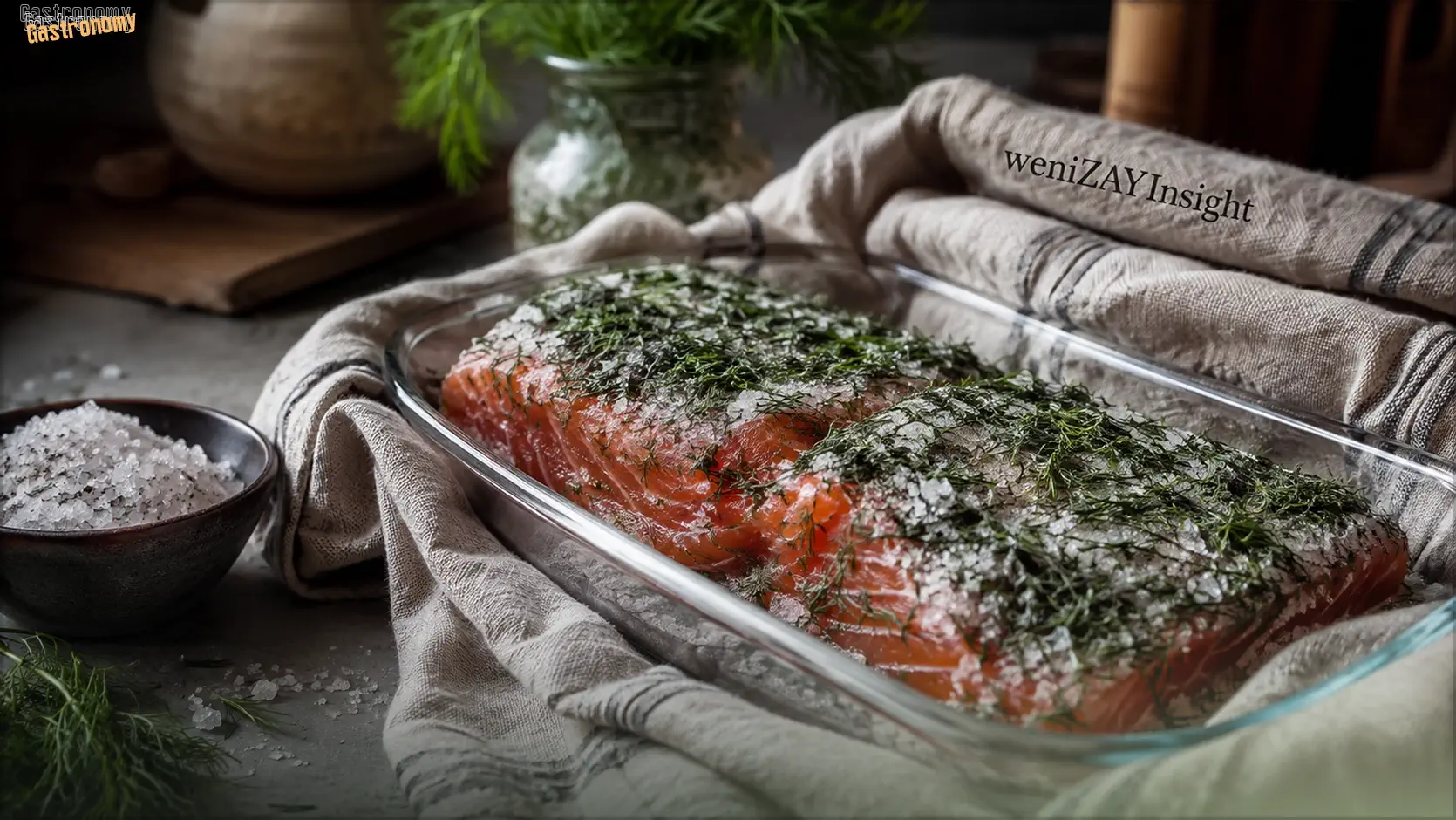
Salted and sugared salmon, weighted and refrigerated for a day or two. It is fast, forgiving, and almost impossible to get wrong. This is where everyone should begin.
2. Salt beef and brisket — the patient cure
A larger cut of beef, cured for a week or more in salt, sugar, and pickling spices, then gently simmered. This is the cure that becomes deli-style salt beef, and it is the foundation of dishes like spiced beef.
3. Spiced pork — the seasonal cure
Pork rubbed with salt, sugar, and warm spices and left to cure before roasting. It is the festive cure, the one that fills the kitchen with cloves and juniper in the weeks before Christmas.
The Recipe: Gravlax — Your First Cure
What you need:
- 500 g salmon fillet, skin on, pin-boned
- 4 tbsp coarse sea salt
- 3 tbsp sugar
- A large bunch of dill, roughly chopped
- 1 tsp crushed white or black pepper
- Zest of one lemon (optional)
How to make it:
- Mix the cure: combine the salt, sugar, pepper, lemon zest, and most of the dill.
- Coat the fish: spread the mixture evenly over the flesh side of the salmon, pressing it in gently.
- Wrap and weight: lay the salmon on a layer of cling film or cheesecloth, wrap tightly, and place in a dish. Set a small weight on top (a couple of cans work well).
- Cure: refrigerate for 24–48 hours, turning once halfway through. The fish will firm up and release liquid — this is the cure working.
- Rinse and slice: rinse off the cure, pat dry, and slice thinly at an angle, away from the skin.
- Serve: with mustard sauce, lemon, capers, rye bread, and the rest of the dill.
The Basic Ratios
Once you know the ratios, you can cure almost anything. These are the starting points, not rigid laws:
- Equal-parts cure (fish): roughly equal salt and sugar by volume. This is the classic gravlax balance — gentle, sweet-salty, forgiving.
- Salt-forward cure (meat): about two parts salt to one part sugar. Use this for beef and pork, where you want a firmer cure and deeper seasoning.
- Spice freely: crushed juniper, black pepper, coriander, and cloves are traditional in many cures and add character without affecting safety.
- Time by thickness: a thin salmon fillet cures in 24–48 hours; a thick beef joint needs 5–10 days. The thicker the cut, the longer the wait.
Curing as Preservation, and as Presence
Curing belongs to the same family of kitchen arts as preserving the harvest — the belief that food can be held across time, that abundance can be kept for the lean months, that care applied today becomes nourishment tomorrow. Where canning seals the season into a jar, curing writes patience into the food itself.
But curing also teaches something quieter. In a kitchen culture obsessed with speed and instant results, it asks you to begin something and then leave it alone. To trust the salt, the sugar, and the days. And when you finally slice into that firm, fragrant gravlax — the one you made with almost no effort and a great deal of faith — you taste the truth at the heart of the bargain: some of the best things are not made quickly. They are made slowly, and then allowed to become what they were always going to be.
Для комментирования войдите или зарегистрируйтесь.