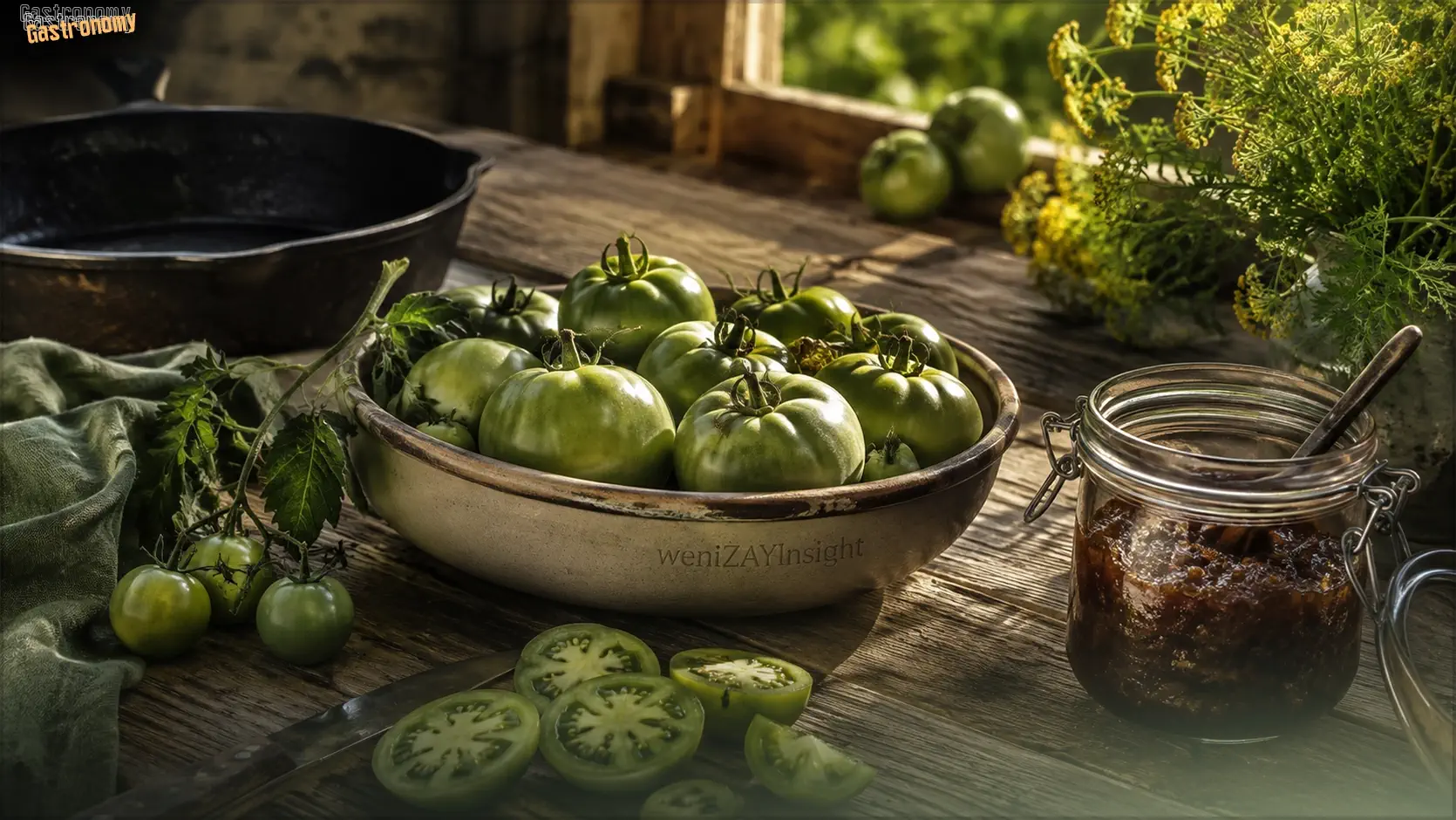
The Blackening Vines
There is a specific, quiet grief that arrives in the garden in late October. The frost is coming. The leaves of the tomato plants are curling, turning brown, and finally blackening in the cold night air. You walk down the rows and pick the last of the red ones, feeling the heavy, sun-warmed weight of the season's final harvest. But hanging beneath the dying leaves are dozens of green tomatoes. Hard, pale, and stubbornly unripe. They will never blush on the vine. The summer ran out of time before they could finish.
It is tempting to pull the vines and compost the green fruit, to write them off as a failure of the season. But a green tomato is not a failure. It is simply a sentence the garden didn't finish. And it is up to the kitchen to provide the ending. You do not throw them away. You slice them, you simmer them, or you coax them into ripening. You answer the season's last question.
Three Paths for the Unripe
When you bring a bowl of hard, green tomatoes into the kitchen, you have three choices. Each one represents a different relationship with time and a different philosophy of autumn preserving.
1. The Windowsill: The Path of Patience
If the tomatoes are large and have a slight give when pressed, they can still ripen. Bring them inside, away from the frost, and lay them on a sunny windowsill. To speed up the process, place them in a paper bag with a ripe apple or banana. The fruit releases ethylene gas, a natural ripening hormone that will coax the tomatoes into turning red over the next week or two. It is a small act of faith: trusting that the fruit still has the capacity to change, even when separated from the vine.
2. The Skillet: The Path of Immediate Gratification
If you want to eat them today, you fry them. Fried green tomatoes are a cornerstone of Southern American cooking, born from the exact same end-of-season necessity. You slice the hard green fruit thick, dredge it in buttermilk and coarse cornmeal, and fry it in bacon fat or oil until the crust is shatteringly crisp and the inside is tart and tender. It is a dish that celebrates the tomato exactly as it is right now: sharp, firm, and unapologetic.
3. The Preserving Pot: The Path of Time Travel
If you have a massive bowl of them and want to save the harvest for the dark months, you make green tomato chutney. This is the ultimate zero-waste rescue. Simmered slowly with onions, apples, vinegar, and warm spices, the hard green flesh breaks down into a sticky, sweet, and sharply spiced preserve. It is the kitchen's way of saying: I will not let this go to waste. I will carry it across the winter.
The Recipe: End-of-Season Green Tomato Chutney
What you need:
- 1 kg green tomatoes, roughly chopped
- 2 large onions, finely chopped
- 2 tart cooking apples (like Bramley or Granny Smith), peeled and chopped
- 150 g sultanas or raisins
- 250 g dark brown sugar
- 500 ml apple cider vinegar
- 1 tbsp mustard seeds
- 1 tsp ground ginger
- 1 tsp ground coriander
- 1/2 tsp chilli flakes (optional)
- 1 tsp salt
How to make it:
- Macerate: Place the chopped tomatoes, onions, and apples in a large, heavy-bottomed pot. Sprinkle with the salt and let them sit for an hour to draw out their juices.
- Combine: Add the sultanas, brown sugar, cider vinegar, mustard seeds, ginger, coriander, chilli flakes, and salt to the pot. Stir well.
- Simmer gently: Bring the mixture to a boil, then reduce the heat to a very low simmer. Cook uncovered for 1.5 to 2 hours, stirring occasionally to prevent sticking.
- Reduce: The chutney is ready when it is thick, sticky, and dark, and when you drag a wooden spoon through it, it leaves a clear channel that does not immediately fill with liquid.
- Jar and seal: Spoon the hot chutney into sterilized jars, seal tightly, and let it cool. Store in a cool, dark place.
Opening the Jar in February
The true magic of green tomato chutney is not revealed on the day you make it. It is revealed on a grey, freezing Tuesday in February. The garden is buried under snow or locked in hard frost. The memory of summer feels impossibly distant. You open the pantry and take out a jar of the chutney. The lid pops. The smell of cider vinegar, mustard seed, and warm ginger fills the kitchen.
You spoon it onto a plate next to a piece of sharp cheddar cheese and some crusty bread. You take a bite. It is sweet, sharp, and deeply savoury. It tastes like the end of the summer, rescued from the frost and carried safely through the dark. The tomatoes never blushed on the vine, but in the end, they gave you exactly what you needed. They were not a failure. They were the season's last question, and the chutney was your perfect, patient answer.
Для комментирования войдите или зарегистрируйтесь.