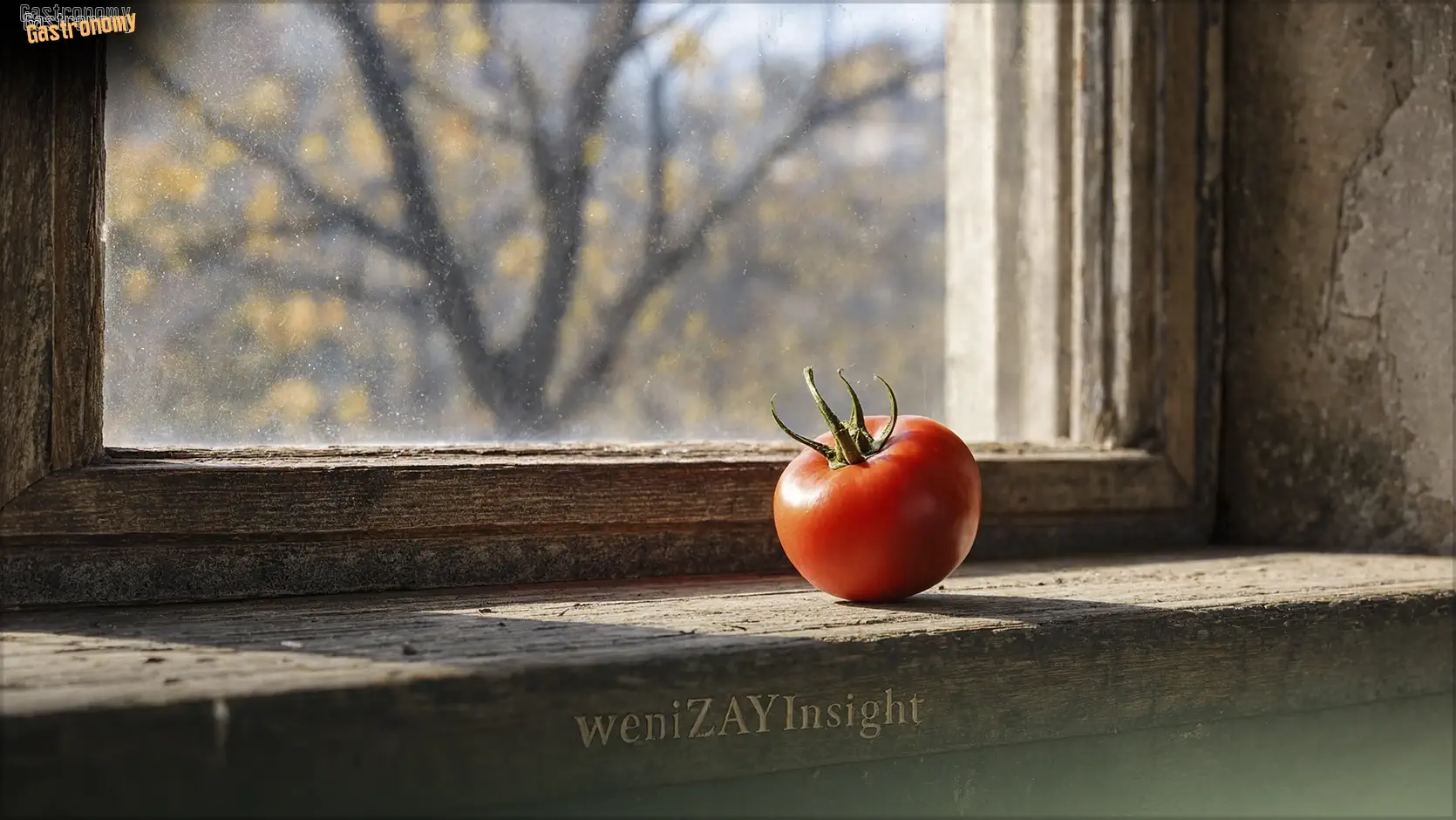
The Anatomy of a Final Bite
The skin snaps with a sound like a quiet secret. The juice is warm, startlingly sweet, and laced with that sharp, green acidity that only comes from a vine that has spent months drinking the sun. You chew slowly. You are not just eating a tomato; you are consuming the ghost of July.
There is a specific, heavy melancholy that arrives with the last harvest. It doesn’t matter if the fruit is slightly bruised or smaller than the ones you ate in August. Its value has shifted. It is no longer just food. It is an endpoint. When we engage in seasonal eating, we accept a beautiful, painful contract with nature: everything we are given, we must eventually watch disappear.
The Neuroscience of Nostalgia
Why does this tiny, red sphere hold so much emotional weight? The answer lies in the olfactory bulb, the part of the brain directly wired to our memory and emotional centers. Flavour memory is the most stubborn of all our senses. While we might forget the exact temperature of a summer evening or the song playing on the radio, the taste of a sun-warmed tomato will instantly teleport us back to the exact moment we first tasted it.
When you eat that final piece, your brain is cross-referencing the taste with every other tomato you’ve eaten this year. It is a neurological summary of the season. This is why mindfulness in cooking and eating is so vital. If we rush through the abundance of summer, the absence of autumn will feel like a theft rather than a transition.
The Practice of Seasonal Letting Go
Modern life has trained us to reject impermanence. We want strawberries in December and tomatoes in March. We freeze, can, and preserve, desperate to pause time. But there is a profound psychological relief in allowing a season to end.
Practicing letting go through food teaches us how to handle larger life transitions. When we learn to say goodbye to a season’s bounty with gratitude instead of panic, we build the emotional resilience to say goodbye to phases of our lives, to relationships, and to our own past selves.
A Ritual for the Empty Vine
To close the chapter on the garden's yield, try this simple sequence to transition your mindset from abundance to rest:
- Harvest with intention: Pick the final vegetables not as a chore, but as a ceremony. Thank the soil and the sun.
- Prepare simply: Cook the last of the produce with minimal interference. A drizzle of oil, a pinch of salt, and low heat.
- Eat without distraction: Turn off the screens. Look out the window at the changing leaves. Taste the transition.
- Clear the space: Once the plate is empty, pull up the dead vines. Compost them. Make physical room for the winter rest.
Embracing the Quiet
The vine is bare now. The garden is turning brown and gray, preparing for the frost. But there is a deep, resonant peace in this emptiness. The work is done. The fruit was given, it was received, and it is finished. As you wipe the last drop of juice from your plate, you realize that the grief of the final bite is just love with nowhere to go. And when the first green shoots break through the frozen soil next spring, that love will have somewhere to go again.
Копировать
Спросить Qwen
Объяснить
Перевести(ru-RU)
Для комментирования войдите или зарегистрируйтесь.