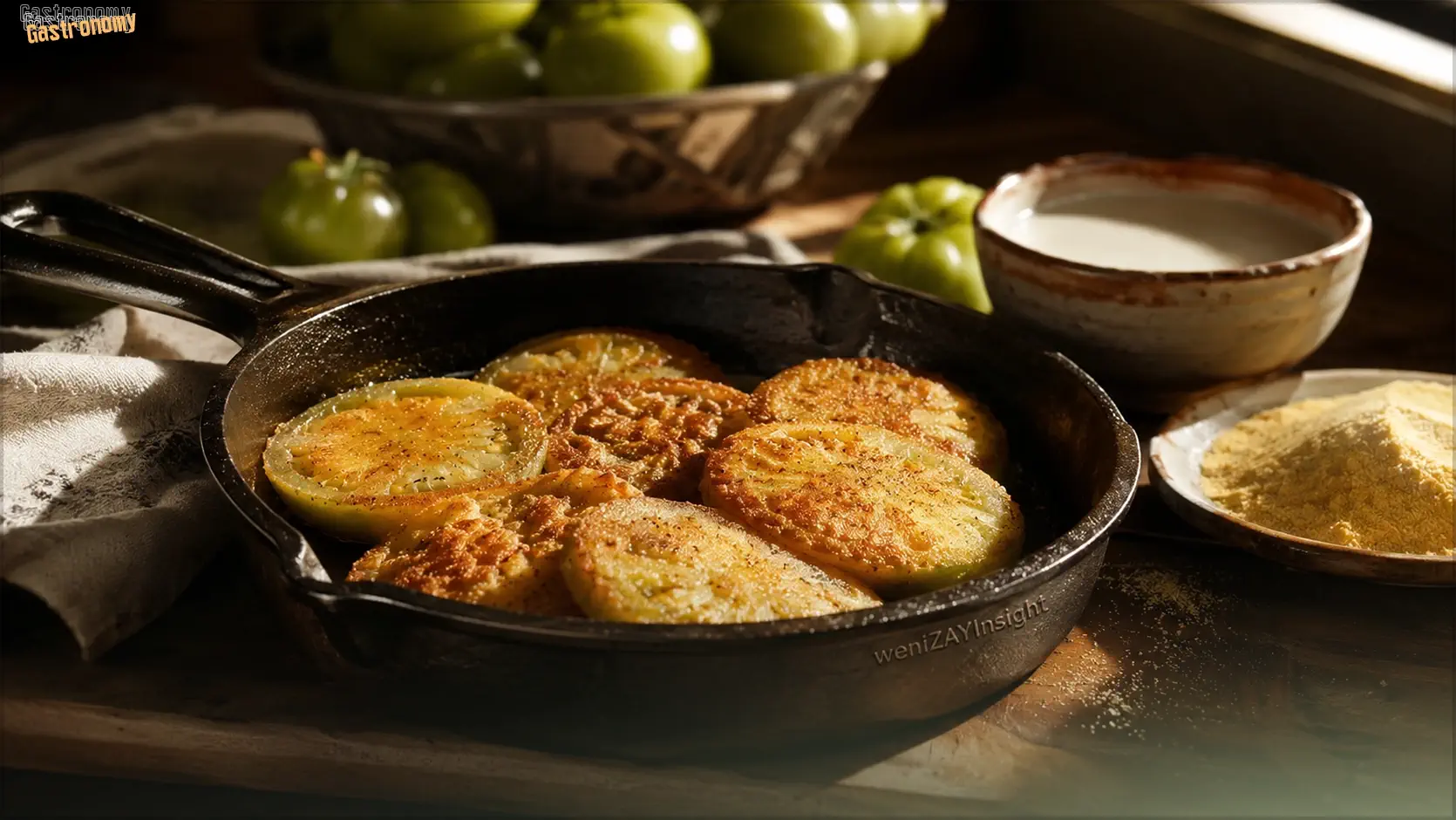
The Tomatoes That Would Not Blush
In the American South, the first frost does not arrive gently. It comes hard and fast, blackening the tomato vines overnight and leaving dozens of hard, green fruit hanging on the dying plants. To the uninitiated, this looks like a loss — a garden that ran out of time, a harvest that failed to finish. But in the Southern kitchen, a green tomato is not a failure. It is an ingredient. It is the exact thing a cast-iron skillet has been waiting for all summer.
Fried green tomatoes are not a modern invention, and they are not a novelty dish. They are a cornerstone of Southern cooking, born from the same end-of-season necessity that produces green tomato chutney in Britain. When the frost comes and the tomatoes refuse to ripen, you do not compost them. You slice them, dredge them in buttermilk and cornmeal, and fry them until the crust is shatteringly crisp and the inside is tart, tender, and perfect. You turn scarcity into celebration.
Why Green Tomatoes Fry So Well
A ripe tomato is a terrible thing to fry. It is too soft, too watery, too sweet. It collapses in the hot oil and turns to mush. But a green tomato is different. It is firm, almost hard, with a tart, slightly astringent flavour that stands up beautifully to the richness of frying. When you slice a green tomato and dredge it in buttermilk and cornmeal, you are building a protective armour around the fruit. The crust fries to a golden, crunchy shell, while the inside softens just enough to become tender without losing its structure.
The result is a perfect contrast: crisp outside, tart inside. It is not a substitute for a ripe tomato. It is something entirely different, something that could not exist without the frost. The green tomato is not an unripe red tomato. It is its own ingredient, with its own texture, its own flavour, and its own reason for being.
The Holy Trinity: Buttermilk, Cornmeal, Bacon Fat
The traditional Southern method for frying green tomatoes relies on three ingredients that work together in perfect harmony: buttermilk, cornmeal, and bacon fat. Each one plays a specific role, and substituting any of them changes the dish fundamentally.
Buttermilk is the dredge. Its acidity tenderizes the tomato slightly and helps the cornmeal adhere to the surface. It also adds a subtle tang that complements the tartness of the green tomato. You cannot substitute regular milk; it lacks the acidity and the thickness that buttermilk provides.
Cornmeal is the crust. Coarse-ground cornmeal, not fine corn flour, gives the fried tomato its signature crunch. The cornmeal fries to a deep golden colour and a shatteringly crisp texture that flour alone cannot achieve. Some cooks mix the cornmeal with a little flour for extra crispness, but the cornmeal must be the dominant ingredient.
Bacon fat is the frying medium. This is non-negotiable in traditional Southern cooking. Bacon fat has a high smoke point, which means it can get hot enough to fry without burning, and it adds a deep, smoky, savoury flavour that vegetable oil simply cannot replicate. If you do not have bacon fat, you can use a neutral oil with a high smoke point (like peanut or canola oil), but the dish will lack the depth that makes it Southern.
The Recipe: Traditional Fried Green Tomatoes
What you need:
- 4 large green tomatoes, sliced into 1 cm (1/2 inch) rounds
- 1 tsp salt, plus more for seasoning
- 1 cup buttermilk
- 1 cup coarse cornmeal
- 1/2 cup all-purpose flour (optional, for extra crispness)
- 1 tsp black pepper
- 1/2 tsp cayenne pepper (optional)
- 1/4 cup bacon fat (or neutral oil with a high smoke point)
How to make it:
- Salt the tomatoes: Lay the tomato slices on a paper towel and sprinkle both sides with salt. Let them sit for 10–15 minutes to draw out excess moisture. Pat them dry with another paper towel.
- Set up the dredging station: Pour the buttermilk into a shallow bowl. In a separate bowl, mix the cornmeal, flour (if using), black pepper, cayenne, and a pinch of salt.
- Dredge the tomatoes: Dip each tomato slice into the buttermilk, coating both sides. Then dredge in the cornmeal mixture, pressing gently to ensure an even coating. Shake off excess.
- Heat the fat: In a large cast-iron skillet, heat the bacon fat over medium-high heat until it shimmers. The fat should be hot enough that a drop of buttermilk sizzles immediately when added.
- Fry in batches: Add the tomato slices to the skillet in a single layer, being careful not to overcrowd. Fry for 3–4 minutes per side, until golden brown and crisp. Transfer to a paper towel-lined plate to drain.
- Serve immediately: Fried green tomatoes are best eaten hot, straight from the skillet. Serve with a remoulade sauce, ranch dressing, or a simple squeeze of lemon.
The Dish That Became a Symbol
Fried green tomatoes were once a humble, practical dish — the food of farm kitchens, made from what the garden gave when the season ran out. But in 1987, a novel called "Fried Green Tomatoes at the Whistle Stop Cafe" turned them into a cultural icon. The book, and the film that followed, celebrated the dish as a symbol of Southern resilience, resourcefulness, and community. It was the food of people who made do with what they had, who turned scarcity into celebration, who fried what the frost left behind and called it a feast.
Today, fried green tomatoes appear on menus across the American South and beyond, often served as an appetizer with remoulade or pimento cheese. But at their heart, they remain what they always were: a dish born from necessity, a refusal to waste, and a testament to the creativity of kitchens that had to make do. They are the taste of the season's last question, answered with buttermilk, cornmeal, and bacon fat.
What to Serve Them With
Fried green tomatoes are rich and savoury, and they pair beautifully with bright, acidic, or creamy accompaniments. Traditional Southern pairings include:
- Remoulade: A tangy, spicy sauce made from mayonnaise, mustard, capers, and hot sauce. It cuts through the richness of the fried tomato and adds a bright, complex flavour.
- Pimento cheese: A Southern spread made from cheddar cheese, mayonnaise, and pimento peppers. It is creamy, sharp, and slightly sweet, and it complements the tartness of the green tomato beautifully.
- Ranch dressing: A simpler option, but a classic. The cool, herby creaminess of ranch balances the hot, crisp tomato perfectly.
- A squeeze of lemon: Sometimes the simplest pairing is the best. A bright squeeze of lemon juice over the hot tomatoes adds acidity and freshness, cutting through the fat and highlighting the tartness of the fruit.
For a more substantial meal, fried green tomatoes are often served alongside a hearty breakfast of eggs, bacon, and biscuits, or as a side dish with fried chicken or catfish. They are versatile, satisfying, and deeply comforting — the kind of food that makes you glad the frost came, because without it, you would never have tasted this.
Для комментирования войдите или зарегистрируйтесь.