The Physics of Outdoor Eating
November the fifth does not ask for your comfort. It asks for your presence. You stand in a field or on a village green, the air so cold it feels sharp in your lungs, and you watch the sky catch fire. The smoke from the bonfire stings your eyes, mixing with the scent of damp wool and burning wood. In this freezing, exhilarating chaos, you are handed your dinner. It is not served on fine china. It is served in your bare, numb hands.
This is the true genius of Bonfire Night food. It is not designed for a dining room. It is engineered for outdoor eating in the biting cold. The sugar is dense and immediate. The spice is heavy and warming. The food is a physical counterweight to the November chill. While a delicate dessert might dissolve into sadness in the damp night air, the sticky, resilient flavors of Guy Fawkes Night hold their ground. They are built to survive the frost, and in doing so, they keep us alive through it.
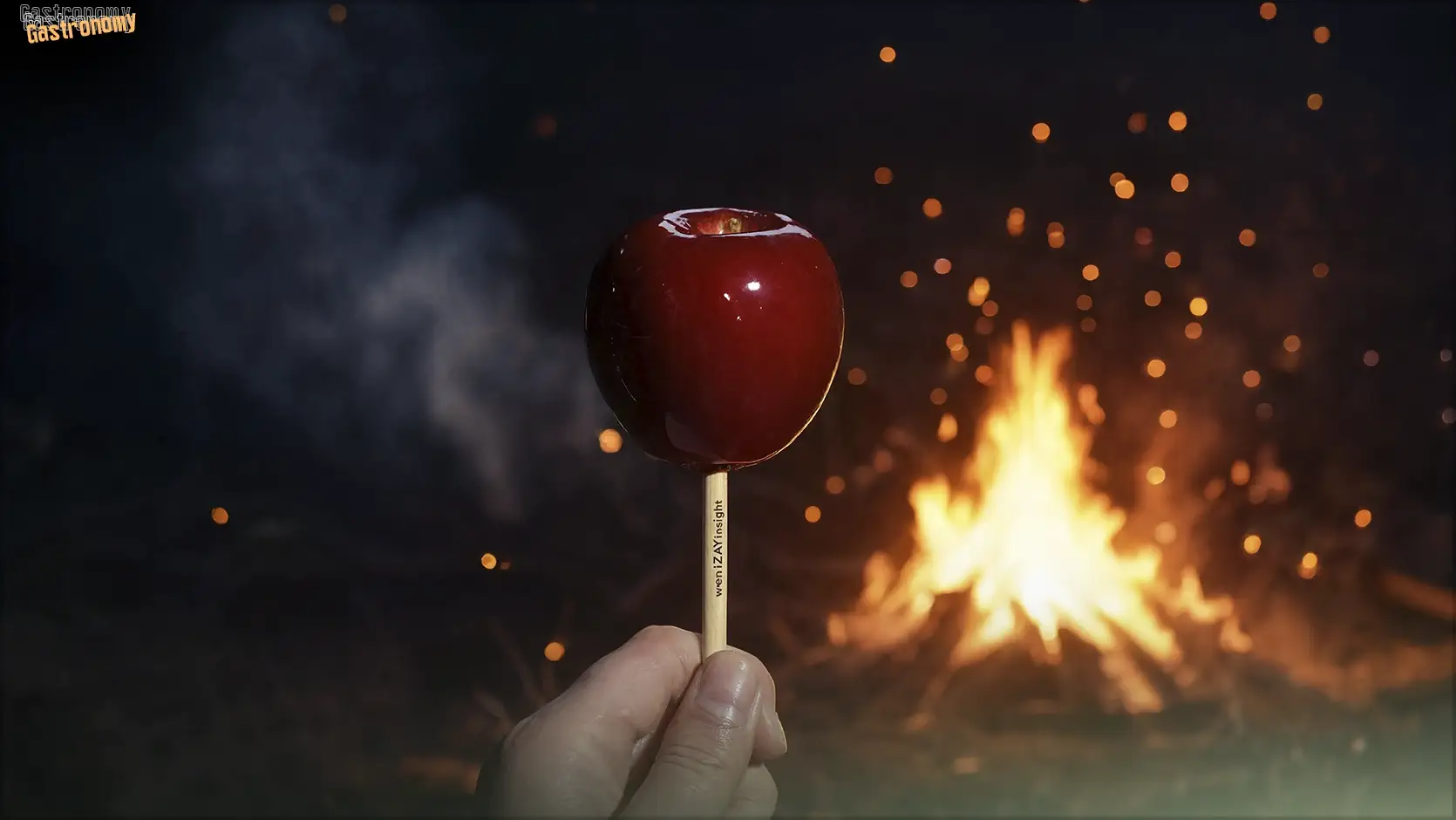
Toffee Apples: A Glass-Like Armor
There is a specific, dangerous beauty to a toffee apple. The fruit is encased in a shell of boiled sugar, hard as amber and glowing like a captured sunset. To eat it is to engage in a minor battle. You do not bite it gracefully; you crack it. The sugar pulls at your teeth, sticking to your lips and fingers, while the sharp, acidic apple beneath cuts through the intense sweetness.
It is a rugged, handheld weapon against the cold. While a delicate pastry demands a spoon, a ceramic dish, and the safety of a kitchen table, the toffee apple asks you to eat it standing up, with your collar turned up against the wind. It is messy, unapologetic, and entirely perfect for the occasion.
Parkin: The Cake That Gets Better With Time
If the toffee apple is the flash of the firework, then parkin is the deep, glowing heart of the bonfire. This dark, sticky gingerbread is made with black treacle, golden syrup, oatmeal, and a heavy hand of ground ginger. It is a staple of British autumn traditions, particularly in the north of England, where the cold bites the hardest.
The magic of parkin lies in its patience. When it first comes out of the oven, it is too soft to slice. It must be wrapped tightly and left to mature for days, sometimes weeks. During this time, the oats slowly absorb the moisture from the syrup and treacle, transforming the cake into something incredibly moist, dense, and rich. It is a dessert that rewards waiting—a lesson in itself. For the full ritual, see the authentic parkin recipe.
A Ritual for the Bonfire Table
To truly honor the spirit of the night, the food must be prepared with intention, designed to be carried, shared, and eaten without fuss:
- Prep for cold hands: Choose foods that can be eaten easily even when fingers are stiff with cold. Wrapping parkin in small squares of greaseproof paper makes it easy to hold.
- Layer the warmth: Serve the cake alongside a thermos of hot tea or a steaming cup of mulled cider. The liquid heat is just as important as the food itself.
- Embrace the sticky mess: Do not try to keep things pristine. The sugar will stick, the cider will spill slightly, and the smoke will leave its scent on your clothes. That is part of the memory.
- Stand together: Do not retreat indoors at the first sign of discomfort. The shared endurance of the cold is what makes the sweetness taste so much more profound.
Choosing Joy in the Dark
As the bonfire burns down to a pile of glowing orange embers and the last firework fades into the black sky, you realize that the cold no longer matters. The sugar is on your fingers, the taste of treacle is on your tongue, and the warmth of the crowd surrounds you. We have always used fire to hold back the dark, but it is the sharing of this heavy, spiced food that truly keeps us warm. It is a simple, ancient agreement: when the world gets cold, we stand together, and we choose joy anyway.
Для комментирования войдите или зарегистрируйтесь.