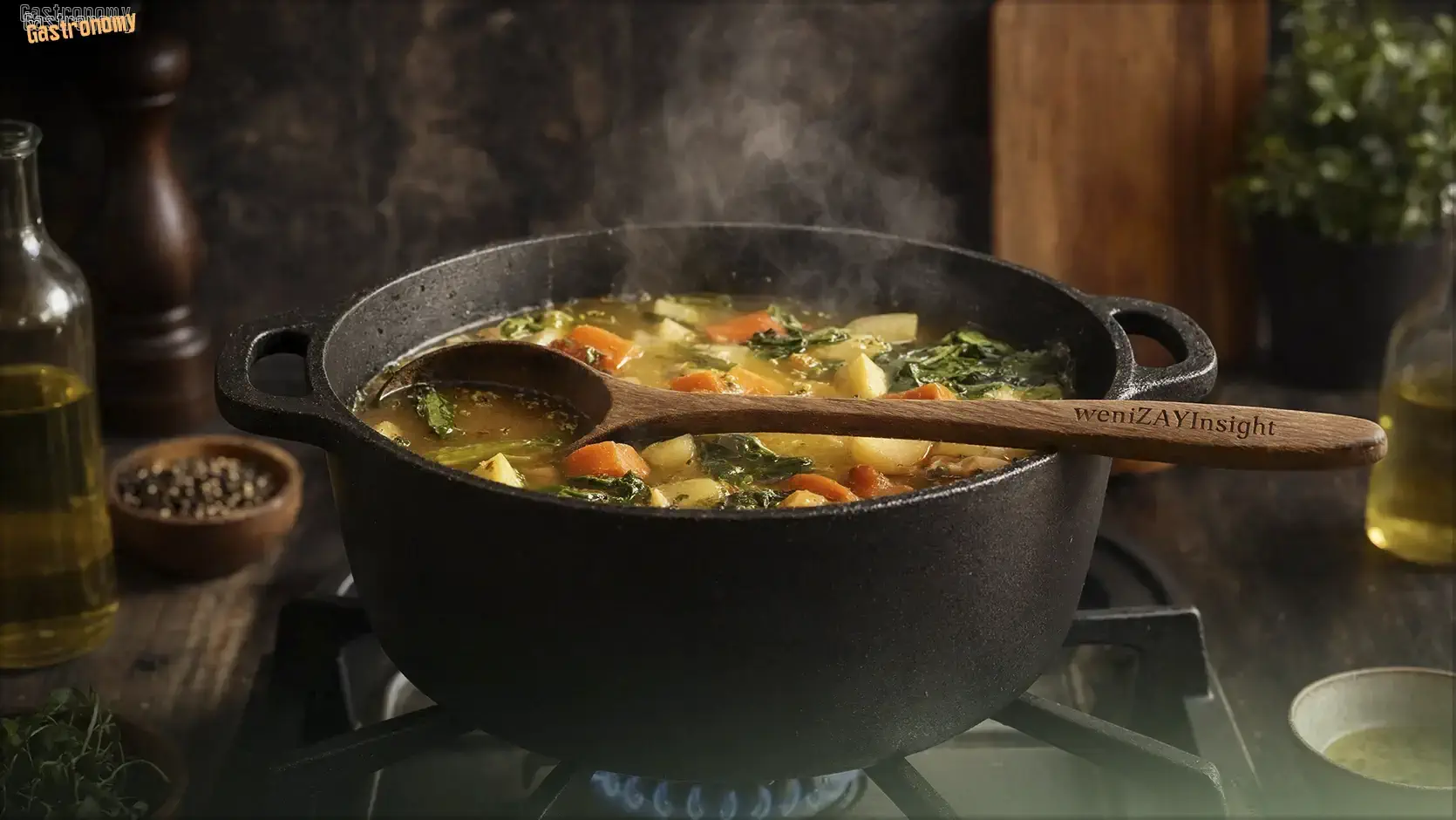
The Evening You Have Nothing Left
There is a particular kind of tired that arrives in autumn. It is not the clean exhaustion of a day well spent; it is the grey, heavy fatigue of shorter days, colder mornings, and a body that has been asking for rest for weeks. You come home. The kitchen is dark. The thought of a recipe — of reading, measuring, watching, plating — feels like a second job you did not apply for. And yet you are hungry. Not hungry for something impressive. Hungry for warmth. Hungry to be fed without being asked to perform.
This is the evening the one-pot meal was made for. One heavy pot. One wooden spoon. Thirty minutes of chopping, if you are feeling generous; fifteen, if you are not. Then the lid goes on, the heat goes down, and for the next hour the only thing required of you is nothing. The pot does the work. The autumn does the rest. And when you finally sit down, bowl in hand, you are not impressed by what you made. You are comforted. And that, in October, is the only review that matters.
Why Autumn Asks for One Vessel
Summer cooking is additive: fresh things layered, dressed, served in their separate perfections. But autumn cooking is the opposite. It is consolidating. The garden is giving up its last, hardy vegetables — the squash, the leeks, the tough greens, the beans dried on the vine. The evenings are cold enough that you want your dinner to radiate heat. And the body, bracing for the dark months, stops wanting salads and starts wanting depth.
One-pot cooking answers all three conditions at once. It takes the season's sturdy vegetables and lets them soften into each other. It keeps everything warm, from stove to bowl to table. And it gives you the depth your body is asking for — the slow, savoury richness that only time and gentle heat can produce. Best of all, it does not ask you to be at your best while making it. The one-pot philosophy is built on trust, and trust is exactly what a tired cook needs.
Three Shapes of the One-Pot Evening
Almost every one-pot meal you will ever love fits one of three shapes. Learn these, and you will never need a recipe again — only a pantry, a pot, and whatever the season has left.
1. The Braise
A piece of meat or sturdy protein, nestled among vegetables, half-covered in liquid, and cooked slowly until everything is tender. Chicken thighs with squash and white beans. Lamb shoulder with root vegetables. Pork with apples and onions. The braise is the richest of the three, the one for when you need your dinner to feel like an occasion even though you did almost nothing to make it.
2. The Stew
Everything cut small, everything in together, everything simmered until it has become one unified thing. A lentil and vegetable stew. A bean and greens stew. A potato and leek stew. The stew is the most forgiving — it does not care about exact proportions, and it tastes better the next day. It is the meal you make with whatever is left, and somehow it always tastes like the season itself. For the purest version, see the garden's last soup.
3. The Grain Bowl
A grain cooked in flavourful liquid, folded through with vegetables, beans, and a dressing, all made in the same pot. Barley with roasted squash and kale. Rice with mushrooms and spinach. Farro with roasted roots and a mustard dressing. The grain bowl is the lightest of the three — the one for when you want nourishment without heaviness, warmth without weight. It is also the fastest, ready in under forty minutes.
The Recipe: The Tired Evening One-Pot Braise
What you need:
- 6 chicken thighs, bone-in, skin on
- 1 small squash (butternut or delicata), peeled and cut into chunks
- 1 can white beans, drained
- 1 onion, sliced
- 3 cloves garlic, crushed
- 400 ml chicken stock (or water)
- A few sprigs of thyme, or a bay leaf
- 2 tbsp olive oil
- Salt and black pepper
How to make it:
- Brown the chicken: season the thighs with salt and pepper. Warm the oil in a heavy pot over medium heat and brown the chicken skin-side down, about five minutes. Remove and set aside.
- Soften the base: in the same pot, cook the onion gently for five minutes until soft. Add the garlic for one minute more.
- Build the pot: add the squash and stir to coat in the onion. Pour in the stock, add the thyme, and bring to a gentle simmer.
- Nest and cover: nestle the chicken thighs back into the pot, skin-side up. Scatter the white beans around. Cover with the lid.
- Cook gently: simmer very gently for 40–45 minutes, until the chicken is cooked through and the squash is tender.
- Rest and serve: let the pot stand, covered, for five minutes. Serve straight from the pot, with bread to soak up the broth.
The Art of Doing Less
There is a quiet rebellion in cooking less. In a culture that treats productivity as a virtue and rest as a failure, making a one-pot meal is a small act of resistance. It says: I will not perform tonight. I will not make five courses, or plate it beautifully, or post a photo. I will make one warm thing, in one pot, and I will eat it slowly, and that will be enough.
This is what the season is trying to teach. Autumn does not ask for your best. It asks for your warmth. It asks you to let the pot do the work, to let the lid do the waiting, to let the evening hold you while you do almost nothing. And when you finally sit down with that bowl — the one you made when you had nothing left to give — you discover something the busier seasons forget: that nourishment does not require effort. It only requires that you be kind enough to feed yourself.
Для комментирования войдите или зарегистрируйтесь.