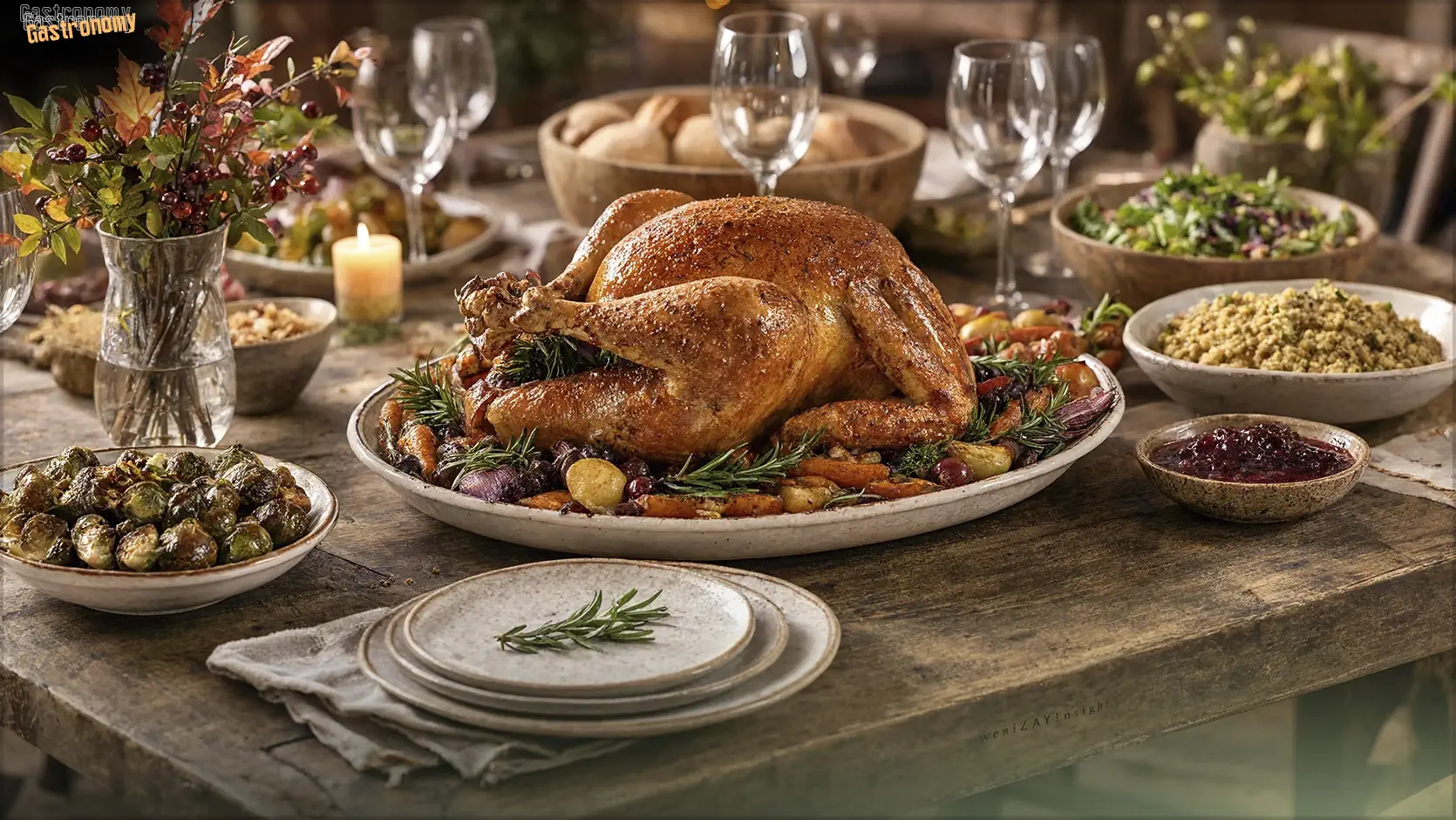
The Gravitational Pull of the Centrepiece
The bird goes into the oven at noon. Slowly, the house fills with the heavy, intoxicating perfume of rendering fat, cracked black pepper, and bruised rosemary. By three o'clock, the kitchen windows are steamed, and everyone is seated. No one checks their watch. No one leaves early. That is the entire point.
In an era of desk lunches and microwave dinners, a Sunday roast is a radical act of defiance. Whether it is a modest chicken, a sprawling Thanksgiving turkey, or a rustic Canadian harvest dinner, the centrepiece dish serves as a gravitational anchor. It demands that we stop moving, sit down, and acknowledge that we are part of a tribe. It is not merely a meal; it is an unspoken agreement to stay present with one another.
The Neuroscience of the Shared Plate
We often think of food as fuel, but the act of sharing it is deeply biological. When we engage in communal eating, looking into the eyes of the people we love across a table laden with food, our brains release a flood of oxytocin. This is the same bonding hormone that connects a mother to her child, the same chemical that builds trust and deepens empathy.
The neuroscience of oxytocin and food reveals that meals eaten in isolation fail to trigger this hormonal cascade. The physical proximity, the passing of heavy bowls, the accidental brushing of shoulders—these micro-interactions are what transform calories into connection. The autumn dinner is quite literally the glue that holds a family's emotional architecture together.
The Unspoken Rules of the Harvest Meal
To truly honor the tradition of the family gathering, the meal must be orchestrated with intention. It is not about Michelin-star perfection; it is about creating a seamless experience of comfort:
- Anchor the table: The roast must be visually stunning. A golden, crackling skin or a deeply caramelized crust signals to the brain that this is a celebration, not a routine.
- Pass the heavy bowls: Serve the food family-style. Forcing people to ask for the potatoes or reach across the table breaks down physical and psychological barriers.
- Embrace the beautiful mess: Let the gravy spill slightly. Let the bread crumbs scatter. A pristine table feels like a museum; a slightly messy table feels like a home.
- Linger after the plates are cleared: The most important conversations rarely happen during the main course. They happen in the quiet aftermath, over the last dregs of wine or tea.
An Agreement to Stay
When the meal is finally over, and the plates are scraped clean, there is a specific, heavy silence that falls over the room. It is the silence of full bellies and quieted minds. The harvest meal has done its work. It has reminded us that while the world outside is rushing toward the winter dark, inside this room, time has been paused. We have broken bread, we have shared the fat and the fire, and we have made the ancient, quiet agreement to stay.
Для комментирования войдите или зарегистрируйтесь.